The Language of Oud: How Ancient Middle Eastern Perfumery Is Rewriting the American Luxury Ritual
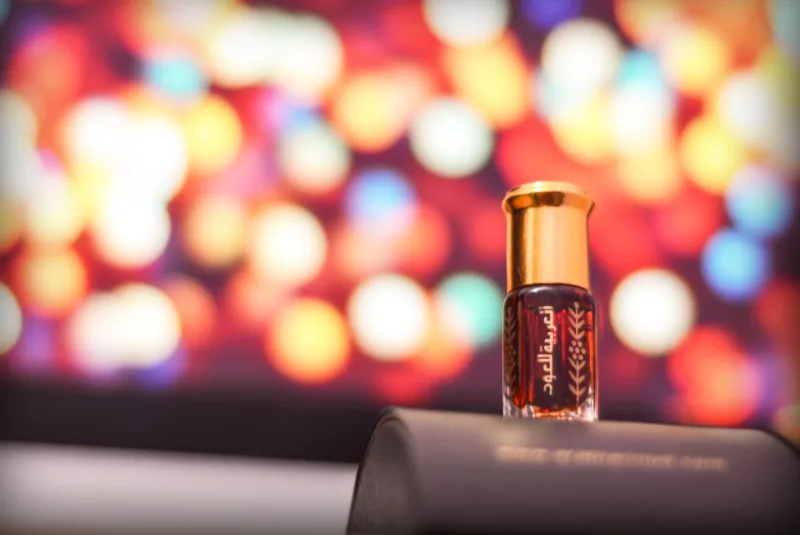
Scent is the most private of the luxury senses. A watch is observed by others; a garment is seen and touched; a home is entered and assessed. But a fragrance operates in a more intimate register—it announces something about the wearer before a word is exchanged, and it lingers in memory long after the encounter has ended. It is perhaps for this reason that affluent Americans, increasingly sophisticated in their approach to personal luxury, have turned with such sustained interest toward the perfumery traditions of the Middle East, and toward oud in particular.
Oud—derived from the Arabic al-oud, meaning wood—is the resinous, aromatic heartwood produced by the agarwood tree (Aquilaria species) when the tree becomes infected with a particular mold. The tree's defensive response creates a dark, resin-saturated core of extraordinary olfactory complexity. It is among the most expensive raw materials in the world by weight, and it has been central to the ceremonial, spiritual, and personal fragrance traditions of the Arabian Peninsula, Persia, and South Asia for well over a thousand years.
From Incense Ritual to Vanity Table
To understand oud's appeal to the contemporary American consumer, it helps to understand what it is not. It is not a simple, linear fragrance—not the clean citrus opening, brief floral heart, and faint musky dry-down that characterizes much of the mass-market perfumery that dominated American department stores for decades. Oud is dense, multi-layered, and deeply animalic. Depending on its geographic origin—whether sourced from the forests of Cambodia, India, or the Arabian Gulf—it may read as smoky and leathery, sweet and balsamic, medicinal, or almost barnyard-like in its earthiness. It evolves continuously on the skin over hours, and no two wearers experience it in precisely the same way.
This complexity is precisely the point. The American luxury consumer who has spent years navigating an increasingly crowded fragrance market—and who has grown quietly tired of wearing the same recognizable signature scents as everyone else in their social circle—finds in oud something that resists easy categorization and instant recognition. It requires, and rewards, attention.
In the Gulf states, oud has historically been experienced not merely as a personal fragrance but as an environmental one. The practice of bakhoor—burning oud chips or oud-infused wood blends over charcoal in a specialized censer—fills a room or a garment with a warmth and depth that no spray bottle can replicate. This ritual dimension, the idea of scent as ceremony rather than afterthought, resonates with a particular American sensibility: the growing appetite for intentional living, for slowing down the getting-ready process and investing it with meaning.
The Niche Revolution and Its Oud Moment
The broader niche fragrance movement in the United States—which began gaining serious commercial momentum in the early 2000s and has since become a significant segment of the luxury goods market—provided the cultural infrastructure for oud's American ascent. As consumers began to seek out independent perfumers, limited-edition compositions, and ingredients with provenance and narrative, oud emerged as perhaps the single most compelling story in the raw-material lexicon.
Luxury houses, both established European maisons and newer American niche brands, responded accordingly. Oud-forward compositions now appear in the high-end flanker lines of nearly every major fragrance house. More significantly, dedicated oud specialists—many of them drawing directly on Gulf and Levantine perfumery traditions—have established loyal American followings among collectors who treat fragrance acquisition with the same rigor applied to wine or art.
The most sophisticated of these consumers have moved beyond oud as a single ingredient and into the broader vocabulary of Arabic perfumery: taif rose, a variety of rose cultivated in the mountains of Saudi Arabia whose petals yield an oil of incomparable richness; ambergris, the rare oceanic material long prized in Eastern perfumery for its ability to fix and amplify other ingredients; musk in its natural and ethically sourced forms; and the layering traditions—the practice of applying multiple fragrances in succession to create a wholly personal composite scent—that have been central to Gulf perfumery culture for generations.
Curating a Personal Fragrance Identity
For the American luxury consumer, the adoption of Middle Eastern fragrance traditions represents something more than a product preference. It reflects a broader cultural shift toward personalization as the ultimate luxury—the desire to construct an olfactory identity that is genuinely singular rather than brand-defined.
The concept of the fragrance wardrobe, common in Gulf culture, is gaining traction in American luxury lifestyle circles. Rather than wearing a single signature scent, practitioners select different fragrances for different contexts: a lighter, rose-forward composition for daytime; a deep, resinous oud for evening; a lighter bakhoor blend for the home. This approach treats scent as a considered daily ritual rather than a habitual application, and it aligns naturally with the broader American luxury consumer's move toward curated, intentional living.
Interior fragrance has become a parallel conversation. American consumers who have discovered oud through personal fragrance are increasingly exploring bakhoor and oud-based home scenting as a complement to their domestic environments—a development that luxury home goods retailers have noted with interest, and one that speaks to a genuinely holistic adoption of the tradition rather than a surface-level trend engagement.
The Science Beneath the Mystique
It is worth acknowledging that oud's complexity is not merely romantic—it has a rigorous scientific basis. Agarwood resin contains hundreds of distinct chemical compounds, the relative proportions of which vary based on the tree species, geographic origin, age of the resin, and extraction method. Steam distillation, CO2 extraction, and traditional hydro-distillation each yield oils with meaningfully different olfactory profiles. A trained nose can distinguish Cambodian oud from Indian oud as readily as a sommelier distinguishes appellations.
This depth of technical knowledge, increasingly accessible to American consumers through specialist retailers and fragrance education platforms, has elevated the conversation around oud from vague exoticism to genuine connoisseurship. And connoisseurship, as any luxury market observer will note, is the surest foundation for sustained category growth.
An Ancient Tradition, A Contemporary Statement
At Hajar, we believe that the most enduring luxury choices are those grounded in something real—a craft, a history, a sensory truth that outlasts seasonal trends. Middle Eastern perfumery, with its millennia of accumulated knowledge and its insistence on complexity, patience, and personal experience, offers the American luxury consumer precisely that foundation.
To wear oud is to participate in a tradition that predates the modern fragrance industry by centuries. It is to make a statement about the kind of luxury one values—not the loudly branded, the immediately legible, but the quietly extraordinary. In a culture learning, gradually, to slow down and attend to what truly endures, that statement carries more weight than any advertisement ever could.