Forged in Tradition: Why Middle Eastern Goldsmithing Is Becoming America's Most Coveted Luxury Investment
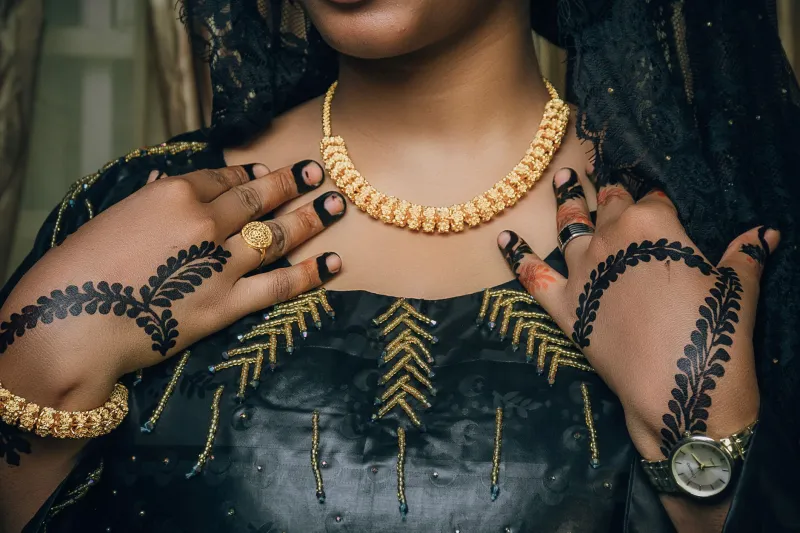
There is a particular weight to a piece of Middle Eastern gold jewelry—not merely physical, though that too is deliberate—but historical. Each curve of wire, each burnished surface, each stone set into place by a craftsman who learned the discipline from his father, who learned it from his, carries with it a lineage that few contemporary luxury goods can honestly claim. Across the United States, a growing community of affluent collectors is beginning to understand precisely what that lineage is worth.
A Craft Measured in Centuries
Middle Eastern goldsmithing is among the oldest continuous artistic traditions in the world. Archaeological evidence of sophisticated metalwork from the Arabian Peninsula and the Levant dates back more than four thousand years, with techniques that have evolved remarkably little in their essential character. The most celebrated of these—filigree, granulation, and repoussé—remain fundamentally hand-executed arts, resistant to full mechanization and therefore resistant to the kind of mass production that dilutes value.
Filigree, perhaps the most recognizable of these techniques to Western eyes, involves the meticulous twisting and soldering of fine gold or silver wire into lace-like patterns of extraordinary delicacy. A single bracelet executed in traditional Yemeni or Omani filigree may represent forty or more hours of a master artisan's concentrated labor. The result is a structural intricacy that catches light differently at every angle—a quality that photographs poorly and rewards the wearer personally, which is itself a form of exclusivity.
Granulation, meanwhile, involves fusing microscopic spheres of gold onto a base surface without the use of conventional solder, a process whose precise metallurgical mechanism was lost to Western craftsmen for centuries and only recently re-examined by contemporary jewelers. The tiny spheres create a texture that is simultaneously primitive and sophisticated, recalling ancient Etruscan and Mesopotamian jewelry while reading as entirely modern against a tailored sleeve.
The Collector's Perspective
Among America's luxury collectors, the conversation around Middle Eastern jewelry has shifted perceptibly over the past decade. What was once considered ethnographic or folkloric—appreciated culturally but not necessarily placed alongside European fine jewelry in terms of investment consideration—is now being reappraised with fresh financial seriousness.
Private collectors in cities including New York, Los Angeles, and Houston have begun consulting with specialists in Islamic art and antiquities when building jewelry portfolios, treating signed or attributable pieces from established regional traditions with the same due diligence applied to contemporary fine art acquisitions. Auction results at major houses confirm this trajectory: antique Gulf jewelry, Ottoman-era pieces, and signed works by contemporary Middle Eastern designers have all demonstrated consistent appreciation over recent sale cycles.
The appeal is not purely financial, of course. Collectors consistently describe an emotional and intellectual dimension to acquisition that distinguishes these pieces from more anonymous luxury goods. Ownership becomes an act of cultural stewardship as much as personal adornment—a distinction that resonates particularly with collectors who have grown skeptical of luxury fashion's more ephemeral seasonal rhythms.
Contemporary Designers Bridging Two Worlds
The most compelling development in this space is not the antique market alone, but the emergence of contemporary designers who work directly within these inherited traditions while addressing the aesthetic sensibilities of the American luxury consumer. These jewelers—many of them trained in both Middle Eastern craft lineages and Western fine jewelry institutions—occupy a rare creative position, translating centuries of technical knowledge into forms that feel immediately relevant.
Their work tends to share certain qualities: a preference for high-karat gold, typically twenty-two or twenty-four karat, which carries a richer, warmer tone than the eighteen-karat standard common in European fine jewelry; an emphasis on hand-finishing that leaves visible evidence of the maker's hand; and a recurring vocabulary of geometric and botanical motifs drawn from Islamic artistic tradition. These motifs—interlocking stars, arabesque vine work, the stylized palmette—carry symbolic weight that deepens the object's meaning without requiring the wearer to perform that meaning explicitly.
For American collectors accustomed to the branded narratives of European luxury houses, there is something genuinely novel in jewelry whose story belongs to a civilization rather than a corporation.
The Investment Case, Plainly Stated
Beyond aesthetics and cultural resonance, the practical investment argument for Middle Eastern fine jewelry rests on several durable foundations. First, the gold content itself: high-karat pieces carry intrinsic metal value that provides a floor beneath their market price, a security not offered by fashion jewelry or even many contemporary fine jewelry pieces whose value is primarily brand-driven.
Second, scarcity. The master artisans capable of executing traditional filigree, granulation, and related techniques at the highest level are a finite and aging population. As their numbers diminish, the supply of authentically hand-crafted pieces of this quality does not increase. Collectors who understand supply dynamics recognize this as a structural driver of long-term value.
Third, and perhaps most significantly for the American market specifically, Middle Eastern fine jewelry remains relatively undiscovered by the broader collector class. Prices that would be considered modest for comparable European antique jewelry are still available for exceptional regional pieces, representing an entry point that more established categories no longer offer.
Wearing the Investment
What distinguishes jewelry from other asset classes—and what makes it particularly aligned with the Hajar philosophy of heritage meeting contemporary life—is that it need not be stored or displayed passively. A filigree cuff worn to a dinner in Manhattan, a granulated pendant chosen for a gallery opening in Chicago, a hand-engraved ring that becomes the most-remarked-upon piece in a carefully considered ensemble: these objects are earning their value in the act of being worn.
For the American luxury consumer who has grown increasingly thoughtful about where and how they invest their resources—who asks not merely what something costs but what it represents and what it will become—Middle Eastern goldsmithing offers a rare convergence of answers. It is beautiful, durable, historically grounded, financially sound, and entirely singular.
In a market saturated with the merely expensive, that combination is, itself, the rarest luxury of all.