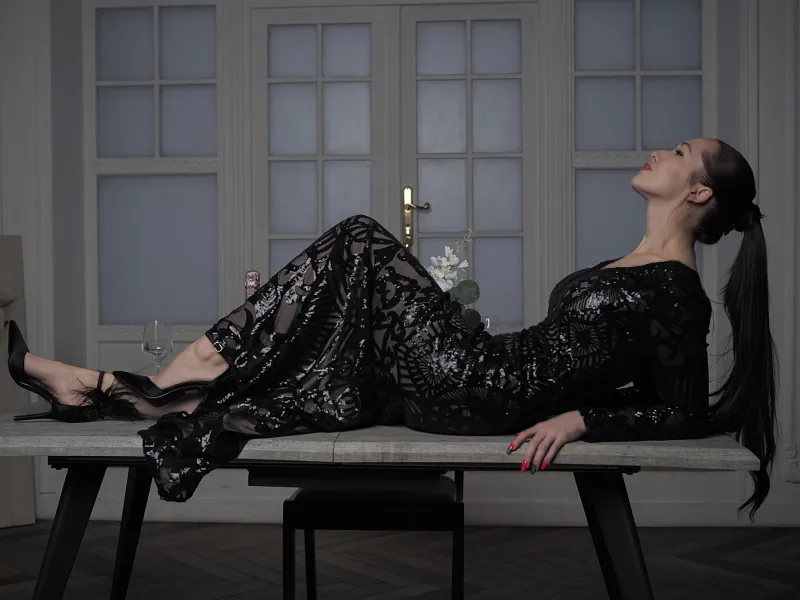
Dressed in Depth: How the Ancient Craft of Middle Eastern Layering Is Reshaping American Luxury Style

There is a particular kind of confidence that comes from a woman who enters a room draped in thoughtfully assembled layers — a silk underdress visible at the hem, a structured outer robe falling with architectural precision, a fine scarf arranged not out of necessity but out of mastery. This is not a scene from a runway presentation, though it very well could be. It is, in essence, the living tradition of Middle Eastern dress — a centuries-old aesthetic philosophy that is quietly, and rather magnificently, transforming the American luxury wardrobe.
A Technique Rooted in Purpose
To understand why layering from this tradition carries such resonance today, one must first appreciate why it developed in the first place. Across the diverse climates of the Arab world, the Levant, and the Persian Gulf, garments were historically constructed to serve multiple functions simultaneously: protection from the sun's intensity, adherence to codes of modesty, and the expression of social and familial identity. A woman might wear a fine cotton thobe beneath a richly embroidered bisht, with a draped headscarf completing an ensemble that communicated sophistication without a single unnecessary flourish.
The result was a wardrobe philosophy built on restraint as a form of artistry. Each layer earned its place. Nothing was superfluous. And the interplay between fabrics — the way a sheer outer layer might reveal the color of what lies beneath, or the way a heavier robe grounds a lighter, more fluid inner garment — created a visual depth that single-layer dressing simply cannot replicate.
From the Souks to the Showroom
In recent seasons, this layered philosophy has made a striking appearance across American luxury fashion. Designers including those who have drawn directly from Middle Eastern craft traditions have presented collections featuring long dusters worn over tailored trousers, diaphanous over-robes paired with structured bodices, and flowing wide-leg silhouettes anchored by fitted underlayers. The visual grammar is unmistakable to those who recognize its origins.
What is particularly compelling is how naturally this approach aligns with current American luxury sensibilities. The so-called "stealth wealth" aesthetic — favoring understated, high-quality dressing over logo-driven visibility — shares a philosophical kinship with the Middle Eastern layering tradition. Both prize craftsmanship over ostentation. Both understand that the most powerful statement a garment can make is one of considered intention rather than conspicuous display.
At Hajar, this convergence is not merely a trend to observe but a founding principle. The brand's collections are conceived with the understanding that heritage and high fashion are not opposing forces — they are, at their finest, the same thing.
The Practical Poetry of Layering
For American women looking to incorporate this approach into their daily dressing, the entry point is more accessible than it might initially appear. The key lies in understanding the three foundational elements of Middle Eastern layering: the base, the body, and the veil.
The Base refers to the innermost layer — typically a long, fluid garment in a neutral or foundational color. Think wide-leg trousers in ivory crepe, or a floor-length slip dress in champagne silk. This layer establishes proportion and sets the tonal palette for everything that follows.
The Body is the structural layer — the garment that gives the ensemble its primary silhouette. A long-line blazer in camel wool, a tailored midi-length coat, or an embroidered kaftan-style jacket all serve this purpose beautifully. This is where craftsmanship should be most visible, where fabric quality speaks most clearly.
The Veil — used here in its broadest sense — is the finishing layer: a scarf, a fine wrap, a draped shawl in a contrasting or complementary texture. This is the layer that transforms a well-dressed woman into a woman with a point of view. It should feel effortless even when it is not.
Honoring the Lineage
It would be a disservice — and frankly, a missed opportunity — to engage with this tradition without acknowledging its cultural depth. Middle Eastern layering is not merely a styling trick; it is a visual language developed over generations, encoded with meaning and refined through lived experience. For American consumers drawn to this aesthetic, the most authentic engagement comes through genuine curiosity and respect.
This means seeking out brands, artisans, and designers who are themselves rooted in these traditions — who understand the craft from the inside. It means investing in quality over novelty, and resisting the impulse to reduce a nuanced tradition to a seasonal trend. The women who wear these layered silhouettes most beautifully are those who wear them with knowledge.
At Hajar, every piece is designed with this responsibility in mind. The brand's heritage is not a marketing footnote — it is the foundation from which every silhouette, every fabric choice, and every proportion decision is made.
Styling Notes for the American Wardrobe
For those ready to begin building a layered wardrobe informed by this tradition, a few guiding principles are worth keeping close:
- Invest in length. Middle Eastern layering derives much of its elegance from elongated proportions. Midi and maxi lengths are your allies. Resist the impulse to shorten.
- Embrace tonal dressing. Layering in a single color family — ivory on cream on sand, or ink on charcoal on slate — creates the kind of sophisticated depth this tradition does so masterfully.
- Prioritize fabric quality. When layers are the point, fabric behavior becomes everything. Silk, fine wool, cashmere, and high-thread-count cotton all drape and interact with one another in ways that synthetic alternatives simply cannot match.
- Allow for negative space. Not every layer needs to be visible at once. The knowledge that a beautifully crafted underlayer exists — even when it is largely concealed — informs the way a woman carries herself.
- Let the occasion breathe. This approach to dressing is equally suited to a gallery opening in Manhattan, a business luncheon in Chicago, or a quiet evening gathering in Los Angeles. Its versatility is part of its genius.
The Deeper Invitation
What Middle Eastern layering ultimately offers the American luxury consumer is not merely a new way to dress — it is a new way to think about dressing. It proposes that the most interesting thing a wardrobe can do is reveal complexity gradually, that elegance is a form of patience, and that the finest clothes are those that reward sustained attention.
In a fashion culture that has long privileged immediacy and exposure, this is a quietly radical proposition. And it is one that, season by season, more American women are choosing to accept.