One Perfect Thing: How the Pursuit of Less Is Leading American Tastemakers to the Depths of Middle Eastern Craft
There is a particular kind of collector emerging in America's most culturally attuned cities. She owns fewer than forty garments. His apartment contains perhaps twelve objects of significance. She has not purchased anything impulsively in years. And yet, in the corner of her otherwise spare living room, a single hand-knotted Moroccan textile commands the entire space with the authority of a museum installation. On his wrist, one piece of hammered Yemeni silver—worn daily, without ceremony, without explanation.
This is not contradiction. This is evolution.
The Problem with Western Minimalism
For the better part of two decades, American minimalism has operated on a seductive but ultimately hollow premise: remove enough, and what remains will speak. The result, in many homes and wardrobes, has been a kind of eloquent silence—clean lines, neutral palettes, and surfaces so unencumbered they border on the anonymous. Scandinavian design principles dominated. Japanese wabi-sabi philosophy was quoted liberally, often without full understanding. The aesthetic was disciplined, even beautiful. But for a growing segment of America's most thoughtful consumers, something essential was missing.
The problem, as many are now articulating, was that Western minimalism confused scarcity with meaning. Removing objects does not automatically imbue those that remain with significance. A white wall is still a white wall. An empty shelf is still absence. What the most discerning minimalists were searching for—and struggling to name—was not fewer things, but denser things. Objects and garments so thoroughly saturated with intention, history, and craft that a single one could do the work of many.
Middle Eastern artisanal traditions, it turns out, have been doing precisely this for centuries.
When Restraint Carries Weight
The concept of baraka—a Arabic word encompassing blessing, spiritual power, and an almost tangible sense of grace—has long informed how objects are made and regarded across the Middle East and North Africa. A piece created with full attention, by hands trained across generations, within a tradition that values the sacred geometry of pattern and the integrity of natural material, carries something that cannot be manufactured at scale or replicated by trend. American collectors with sufficiently refined taste are beginning to recognize this quality on sight, even when they lack the vocabulary to describe it.
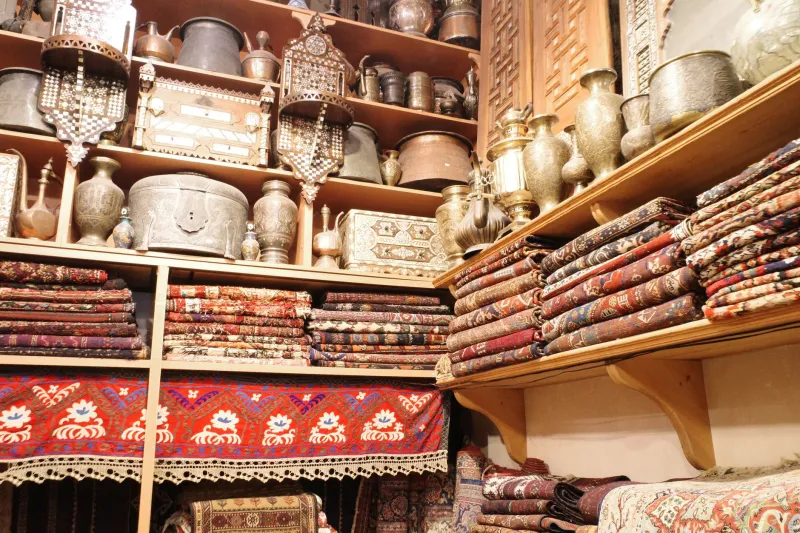
Consider the hand-loomed textiles emerging from the workshops of Fez and Marrakech—not the tourist-facing reproductions, but the genuine article: silks woven on centuries-old looms, patterns derived from Quranic geometric principles, dyes sourced from plants whose preparation alone requires days of work. A single length of such fabric, draped over a chair or folded at the foot of a bed, does not merely decorate a room. It anchors it. It introduces a temporal dimension—the sense that this object has outlasted much and will outlast more—that no mass-produced textile, however expensive, can replicate.
This is what the new American minimalist is purchasing: not decoration, but density.
The Garment as Argument
In the wardrobe, the same logic applies with equal force. A generation of American women who once curated capsule collections around identical white shirts and tailored trousers are now making room—sometimes the only room—for a single embroidered abaya, a hand-stitched kaftan in undyed linen, or a ceremonial jacket whose embroidery required three months of a Yemeni artisan's concentrated attention.
These garments do not shout. That is precisely the point. Among those who understand what they are looking at, the quiet authority of genuine craft communicates more effectively than any logo or label ever could. The American women gravitating toward these pieces are not abandoning their minimalist convictions—they are deepening them. They have arrived at the understanding that a wardrobe of thirty forgettable items is, in fact, more cluttered than a wardrobe of twelve that each carry genuine weight.
Hajar's own design philosophy engages directly with this paradox. The brand's most considered pieces draw on Middle Eastern textile traditions not to perform heritage, but to embody it—to offer the American wearer something that functions at the level of the essential rather than the ornamental.
Ceramics, Silver, and the Single Object
Beyond the wardrobe, the same sensibility is reshaping how affluent Americans approach their domestic environments. The market for authentic Middle Eastern ceramics—Iznik-influenced pieces from Turkish studios, hand-thrown Moroccan clay work finished in matte glazes that reference centuries of craft—has expanded considerably among buyers who describe themselves as rigorous in their editing.
The appeal is not exoticism. Sophisticated American collectors are not decorating with otherness. They are recognizing, with increasing precision, that certain traditions of making produce objects that possess an irreducible integrity—a quality that holds up under sustained attention rather than fading with familiarity. This is the test that fast design perpetually fails and that genuine craft perpetually passes.
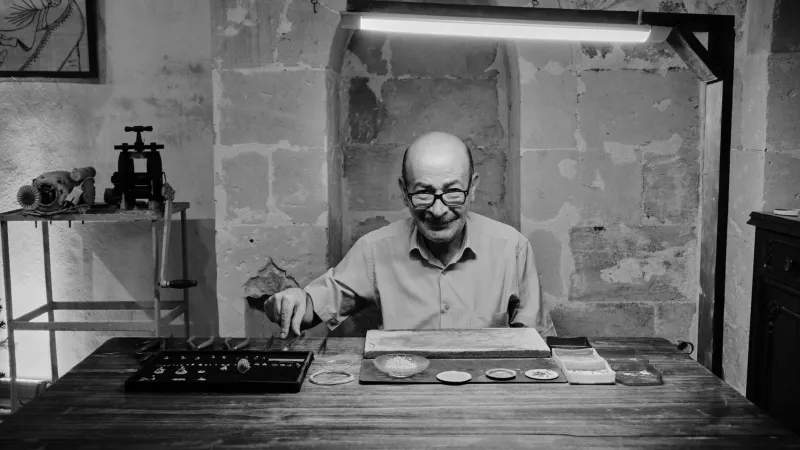
A single silver tea service, produced by a Damascene silversmith working in a technique passed down through four generations, placed on an otherwise unadorned table, creates a focal point of such concentrated beauty that nothing else is required. The minimalist's dream, realized through maximalist craft.
Generational Thinking in a Disposable Age
Perhaps the most significant dimension of this shift is temporal. Middle Eastern artisanal objects are, almost by definition, made to outlast their first owner. The materials are durable. The techniques are proven across centuries. The designs reference traditions so deeply embedded in cultural memory that they do not become dated in the way that trend-driven objects inevitably do.
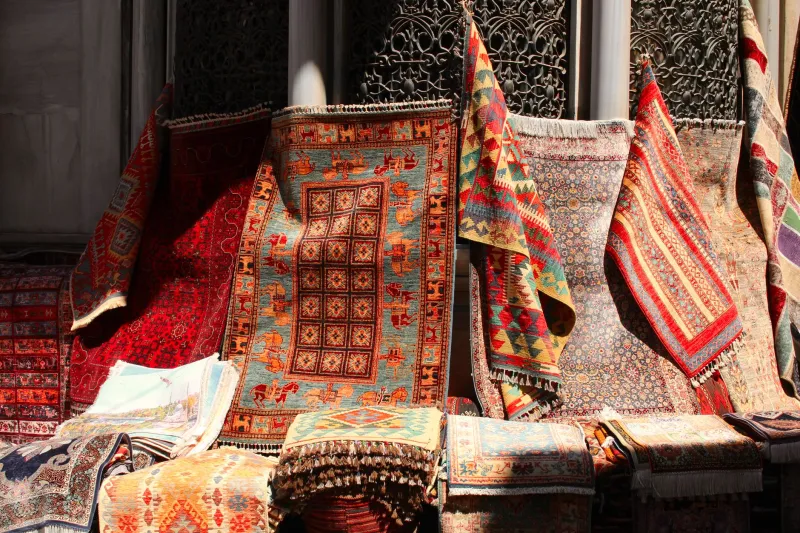
For a generation of American consumers who have grown disillusioned with the cycle of purchase, obsolescence, and replacement, this durability carries profound appeal. To invest in a single hand-knotted rug—knowing that it will improve with age, that it will be passed to one's children, that it carries within its weave a record of human attention that no machine can replicate—is to opt out of disposability entirely. It is, in the most literal sense, a different relationship with objects.
This is the quiet revolution that Middle Eastern craft is catalyzing within American minimalism: not a rejection of simplicity, but its most rigorous fulfillment. The pursuit of less, taken seriously enough, leads inevitably to the question of what more actually means—and the answer, for those willing to look carefully, has been waiting in the workshops of Fez, Damascus, and Sana'a for a very long time.