Beyond the Label: How Unmarked Middle Eastern Craftsmanship Is Becoming America's Most Coveted Status Signal
There is a particular kind of confidence that requires no announcement. It does not seek the approval of a crowd, does not depend on a monogram stitched in gold thread, and asks nothing of those who cannot read its depth. It is the confidence of a woman who enters a room wearing a hand-knotted Omani silver cuff—no hallmark, no house name, no marketing—and understands, with absolute certainty, that what rests against her wrist is irreplaceable. This is the new grammar of American luxury, and it is being written in the ancient workshops of the Middle East.
Across the country's most rarefied collecting circles—from the private galleries of Manhattan's Upper East Side to the curated residences of Bel Air and the understated estates of Palm Beach—a decisive turn is taking place. Ultra-affluent Americans are not simply acquiring fewer pieces. They are acquiring differently, and the criterion that now carries the most weight is the one that cannot be seen at a glance: the complete and deliberate absence of branding.
The Exhaustion of Visibility
For decades, the logic of luxury in America operated on a straightforward premise: the more legible the symbol, the greater the status it conferred. Monogrammed canvas, embossed plaques, and interlocking initials served as a kind of social shorthand, allowing wealth to be read instantly and universally. It was efficient, if ultimately shallow.
But something has shifted. Among collectors who have spent years accumulating recognizable names, there is a growing sense of fatigue—not with quality, but with visibility itself. When a logo becomes ubiquitous enough to appear on an airport concourse or a mid-tier department store floor, it ceases to function as a marker of distinction. It becomes, instead, a marker of aspiration—and aspiration, at the highest levels of wealth, is considered somewhat beside the point.
"The people I work with have moved past the need to be identified," says one private stylist who works exclusively with clients in the nine-figure net worth range. "They already know who they are. What they want now is something that reflects that certainty—something that doesn't explain itself."
Middle Eastern craftsmanship, with its centuries-long tradition of making objects whose worth is encoded in technique rather than trademark, has emerged as the ideal answer to this cultural moment.
The Eloquence of Anonymity
To understand why anonymous Middle Eastern pieces carry such weight among connoisseurs, one must first understand the philosophy that underlies their creation. In many of the region's oldest craft traditions—Moroccan leatherwork, Yemeni silversmithing, Persian carpet weaving, Emirati embroidery—the maker's identity was historically subordinated to the work itself. The object was not a vehicle for personal branding; it was an expression of collective mastery, passed through generations with the kind of patience that industrial production cannot simulate.
This orientation produces objects that are, in a very real sense, self-sufficient. A hand-stitched kaftan from a Tunisian atelier requires no label to communicate its value to someone who has the education to recognize the density of its embroidery, the integrity of its seams, or the provenance of its silk. The knowledge required to appreciate it is itself a form of exclusivity—one that cannot be purchased with a price tag, only cultivated through genuine engagement with craft.
For American collectors who have spent years developing that knowledge, owning such a piece is not merely an aesthetic choice. It is a philosophical one.
A New Vocabulary of Wealth
What makes this trend particularly significant is the way it reorders the social dynamics of luxury signaling. Traditional logo culture operated on breadth—the goal was to be recognized by as many people as possible. The emerging culture of unmarked craftsmanship operates on depth—the goal is to be recognized by the right people, the few who possess the cultural literacy to understand what they are seeing.
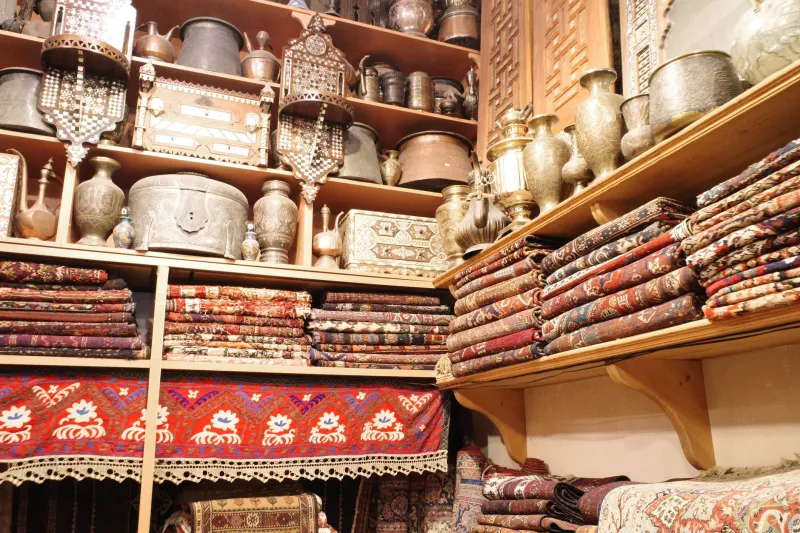
This is a fundamentally different relationship with status. It is exclusive not through price alone, but through knowledge. A hand-forged copper tray from a Damascene workshop, a naturally dyed wool wrap from a Berber collective, a carved amber prayer bead restrung by a Bahraini jeweler—none of these objects announce themselves. They reward attention. They invite inquiry. And they create a bond between owner and observer that is far more intimate and durable than the one forged by a recognizable logo.
Collectors describe this experience in almost private terms. "When someone notices my bracelet and actually knows where it's from, it's a completely different conversation," one New York-based collector noted. "It's not about showing off. It's about being understood."
The Artisan as Invisible Author
Central to this movement is a renewed appreciation for the artisan as a figure of authority—one whose name need not be known for their influence to be felt. This stands in sharp contrast to the celebrity designer model that has dominated Western luxury for generations, in which the personality of the creative director becomes inseparable from the identity of the brand.
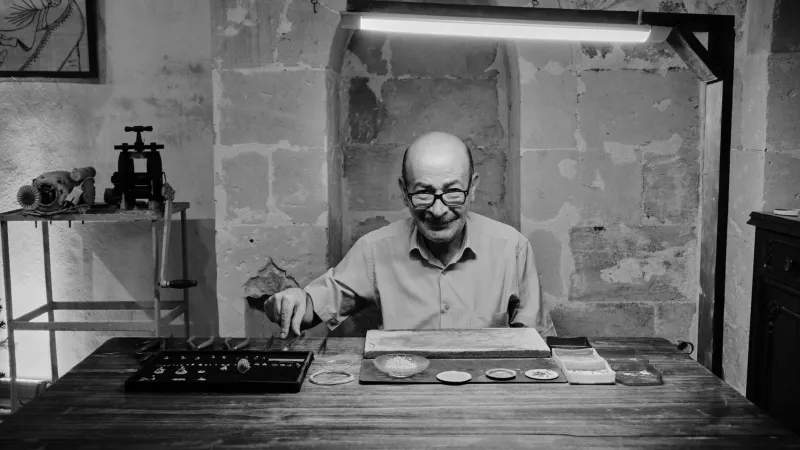
Middle Eastern craft traditions have long operated on a different model, one in which mastery is demonstrated through the work rather than through personal celebrity. The weavers of Isfahan, the goldsmiths of Jeddah, the leather tanners of Fez—their names may not appear in glossy magazines, but their techniques are recognized immediately by those who have taken the time to learn them.
For American collectors, engaging with this model requires a kind of humility that the traditional luxury market rarely demands. It requires the collector to do the work—to study, to travel, to develop relationships with artisans and dealers who operate far outside the usual retail channels. It requires, in short, the investment of time and intellect, not merely capital.
This is precisely what makes it so appealing to those who have already acquired everything that capital alone can buy.
Quiet Authority in Practice
The practical expressions of this shift are varied and deeply personal. Some collectors commission entirely bespoke pieces directly from artisan families, entering into relationships that span years and result in objects that exist nowhere else in the world. Others work through a small network of trusted intermediaries—dealers and cultural consultants who specialize in sourcing unmarked pieces from workshops that have never sought Western distribution.
Still others are drawn to vintage and antique pieces: a nineteenth-century Palestinian embroidered panel, a pre-war Egyptian cotton robe, an early-twentieth-century Omani jewelry set that has passed through several private collections before arriving in their care. These objects carry the additional weight of history—a provenance that no contemporary brand, however prestigious, can manufacture.
In each case, the common thread is the same: the value of the piece is known to the owner, and to those educated enough to recognize it. Everyone else is simply not the intended audience.
The Future of Invisible Luxury
As this sensibility continues to take hold among America's most discerning collectors, its implications for the broader luxury market are worth considering. Brands that have built their identities on visibility may find themselves navigating a landscape in which their most coveted customers are actively seeking alternatives. The question is not whether unmarked craftsmanship will continue to attract serious collectors—it will. The question is whether the wider industry will recognize what this shift reveals about the evolving nature of taste itself.
At Hajar, we have always understood that the most enduring luxury is the kind that does not require explanation. It is the kind that exists at the intersection of heritage and mastery—where a piece speaks volumes in its silence, and where the absence of a label is, itself, the most eloquent statement a collector can make.
The quietest objects, it turns out, have the most to say.