Guardians of the Craft: Inside America's Most Exclusive Collections of Middle Eastern Artisanal Masterworks
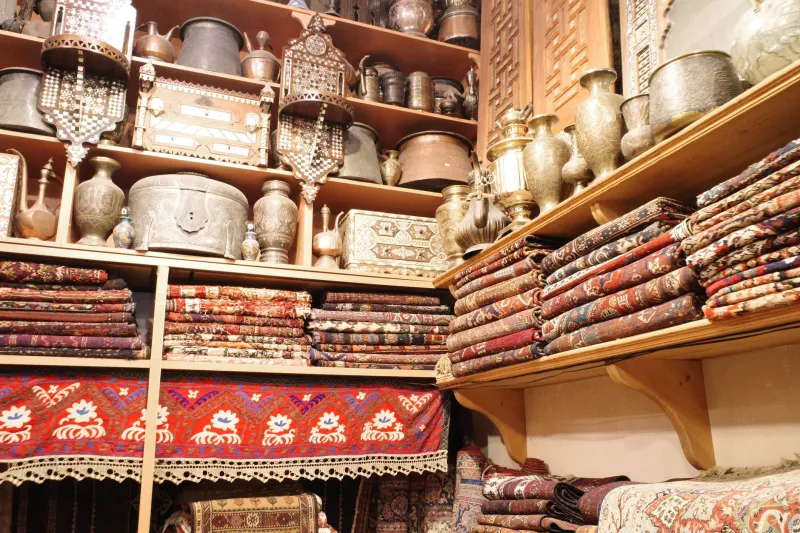
In a temperature-regulated room on the uppermost floor of a Connecticut estate, a nineteenth-century Azerbaijani silk kilim is displayed not on a floor, but on a wall — mounted with archival precision, illuminated by museum-grade lighting, and accompanied by a provenance dossier that runs to forty pages. Its owner, a private equity executive who has spent the better part of two decades assembling what she describes as a "living archive," acquired the piece through a specialist dealer in Istanbul after a two-year correspondence with a family in Baku who had preserved it across four generations. The transaction, she explains, was never purely financial. It was, above all, an act of custodianship.
This sensibility — equal parts connoisseurship, cultural responsibility, and long-horizon investment thinking — is increasingly defining how America's ultra-high-net-worth individuals engage with Middle Eastern artisanal work. What was once a peripheral category in the broader luxury market has quietly matured into one of the most sophisticated collecting disciplines in the country.
Beyond Acquisition: The Philosophy of the Collector-Custodian
The distinction between a buyer and a collector has never been more consequential than it is in this arena. Serious collectors of Middle Eastern craft do not shop — they research, correspond, travel, and wait. Many maintain relationships with master artisans across Morocco, Iran, Turkey, Egypt, and the broader Levant that span years before a single transaction occurs. These relationships are, in many respects, the collection's most valuable asset.
Dr. Leila Nasseri, a cultural consultant who advises private collectors in New York and Los Angeles, describes the shift in her clients' approach over the past decade as profound. "Ten years ago, a collector might acquire a Moroccan wedding blanket because it looked beautiful above a fireplace," she notes. "Today, that same collector wants to know the weaver's name, the village of origin, the dye plants used, and whether the pattern carries a specific tribal or familial meaning. The object is no longer decorative. It is documentary."
This documentary impulse has transformed the authentication process into something approaching academic scholarship. Collectors routinely commission independent textile historians, metallurgical analysts, and regional craft specialists to verify the age, origin, and integrity of prospective acquisitions. Provenance chains are constructed with the same diligence applied to fine European paintings, and many collectors have begun donating digitized records of their holdings to university libraries and cultural institutions.
The Categories That Command Attention
Within this world, certain categories of Middle Eastern craft have emerged as the most actively pursued. Hand-knotted rugs — particularly Persian, Anatolian, and Caucasian examples from the eighteenth and nineteenth centuries — remain the foundational collecting category, with exceptional pieces regularly achieving six and seven-figure valuations at specialized auction houses. But the field has expanded considerably.
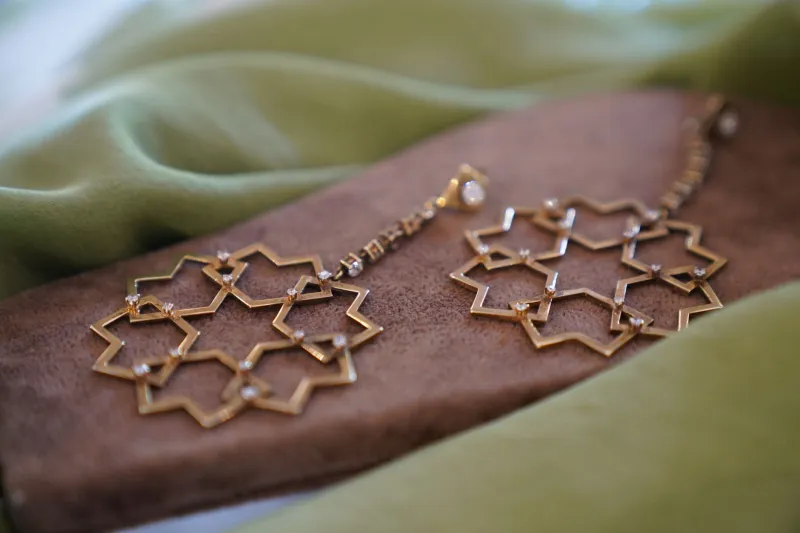
Hand-forged metalwork, including Damascene inlaid brassware, Yemeni silver jewelry, and Iranian engraved copperware, has attracted growing collector interest as the scarcity of pre-industrial examples becomes increasingly apparent. Collectors prize these objects not only for their aesthetic complexity but for the technical knowledge they embody — knowledge that, in many cases, survives in only a handful of living practitioners.
Illuminated manuscripts and decorative calligraphy represent another frontier. As institutions compete for the most significant examples, private collectors are increasingly acquiring works of comparable quality, often through specialist dealers who maintain deep networks in the Gulf and the Levant. The cultural weight of Arabic calligraphy — its position at the intersection of devotion, language, and visual art — lends these acquisitions a resonance that transcends the merely aesthetic.
Ceramic and tile work from the great Persian and Ottoman traditions has also found a dedicated collector base, with rare Iznik tiles and Safavid-era pottery commanding serious attention from buyers who understand both their historical significance and their relative scarcity on the open market.
Building the Network: Artisans, Dealers, and Cultural Institutions
The most sophisticated collectors do not rely on auction houses alone. They cultivate a layered network of relationships that extends from specialist dealers in New York and London to master artisans working in medinas and mountain villages across the Middle East and North Africa. This network is not built quickly, and it is not built transactionally.
Many collectors describe making multiple research trips to a region before acquiring a single piece — visiting workshops, attending craft festivals, meeting with local cultural organizations, and developing the contextual knowledge necessary to evaluate what they encounter. Some have established formal partnerships with artisan cooperatives, providing advance commissions that allow master craftspeople to undertake ambitious works without the pressure of immediate commercial sale.
These relationships serve a dual purpose. They ensure access to works of genuine quality and historical integrity, and they position the collector as a participant in the preservation of living craft traditions rather than merely a consumer of their output. In elite American cultural circles, this distinction carries considerable social and reputational weight.
Authentication, Valuation, and the Question of Legacy
As the market for Middle Eastern artisanal work has matured, so too has the infrastructure surrounding it. A small but growing number of specialist appraisers and authentication services have emerged to serve serious collectors, drawing on expertise in regional textile history, metallurgy, ceramic analysis, and archival research. Some collectors have gone further, establishing private foundations dedicated to the documentation and preservation of Middle Eastern craft traditions — institutions that serve both a philanthropic function and a long-term curatorial one.
The investment dimension of these collections is not incidental. Rare examples of Middle Eastern craft have demonstrated consistent appreciation over the past two decades, with the most significant pieces outperforming many conventional alternative assets. But collectors in this space are typically careful to subordinate the financial rationale to the cultural one, at least in public discourse. The language they use is the language of legacy, of stewardship, of responsibility to traditions that have survived centuries of upheaval and deserve to survive the present one as well.
"What I am building," says one Los Angeles-based collector who has assembled more than three hundred pieces of Moroccan and Andalusian craft over twenty years, "is not an investment portfolio. It is a conversation with history — one that I hope my children, and perhaps eventually a public institution, will continue long after I am gone."
The Cultural Statement of the Private Museum
For Hajar, whose identity is rooted in the conviction that Middle Eastern heritage and contemporary luxury are not merely compatible but mutually illuminating, the rise of the collector-custodian represents something significant. It reflects a broader cultural movement in which the objects, techniques, and traditions of the Middle East are being recognized — by some of the most discerning individuals in American society — as worthy of the same reverence accorded to the great artistic traditions of Europe and East Asia.
The private museums being assembled in Connecticut estates and Malibu compounds and Manhattan penthouses are, in their way, a form of argument: that beauty and meaning are not the exclusive inheritance of any single civilization, and that the hand of a master weaver in Kashan or a silversmith in Sana'a has always deserved a place in the canon of human achievement. The collectors who understand this are not simply acquiring objects. They are, quietly and deliberately, rewriting the terms of cultural value itself.