Marked by Meaning: The Rise of Henna as America's Most Coveted Luxury Beauty Ritual
There is something quietly radical about adorning the body with something that will not last forever. In an era defined by permanence—tattooed declarations, surgical refinements, and indelible personal branding—the ancient Middle Eastern practice of henna application is attracting a new generation of American luxury consumers precisely because of its transience. To wear henna is to participate in something living, something that deepens in color, evolves across days, and eventually surrenders itself back to the skin. For those who have discovered its full ceremonial depth, it is, without question, one of the most intimate beauty rituals available.
And the American market has taken notice.
From Marketplace Curiosity to Marquee Service
For much of the late twentieth century, henna in the United States existed at the periphery of mainstream beauty—a novelty offered at Renaissance fairs, boardwalk kiosks, and music festivals. The designs were often rudimentary, the paste of questionable quality, and the cultural context largely stripped away. What remained was a surface-level transaction that did little justice to a tradition spanning thousands of years across the Arabian Peninsula, North Africa, and South Asia.
That perception has shifted with remarkable speed. Today, luxury spas in Manhattan, Beverly Hills, and Miami's Design District are integrating master henna artists into their pre-event service menus. Private clients—including brides preparing for intimate ceremonies, socialites attending charity galas, and executives seeking a distinctive form of self-expression before high-profile appearances—are booking consultations months in advance. The price point has adjusted accordingly. A bespoke full-hand composition from a recognized practitioner now commands fees comparable to a premium facial or a couture accessory fitting.
The elevation of henna into the luxury tier is not incidental. It reflects a broader cultural appetite, particularly among affluent American women aged 30 to 55, for beauty experiences that carry genuine narrative weight. In a market saturated with products promising transformation, henna offers something rarer: a story.
The Craft Behind the Ceremony
To understand henna's luxury appeal, one must first appreciate the discipline required to master it. The finest practitioners—many of whom trained under family lineages in Morocco, Oman, the UAE, and Pakistan—spend years developing the precise hand pressure, cone control, and compositional instinct that distinguish exceptional work from mere decoration.
The paste itself, when prepared authentically, is a study in botanical luxury. Pure henna powder derived from the Lawsonia inermis plant is combined with essential oils—eucalyptus, lavender, or cajeput—along with acidic agents such as lemon juice to release lawsone, the compound responsible for the characteristic stain. The resulting mixture is left to rest for hours, sometimes overnight, allowing the dye to reach its peak potency. This is not a process that can be rushed, and the best artists will tell you that the quality of the paste is inseparable from the quality of the result.
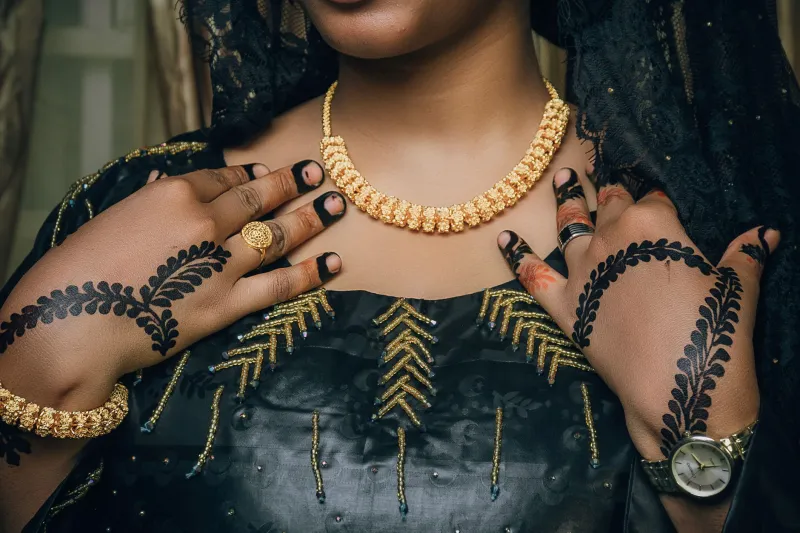
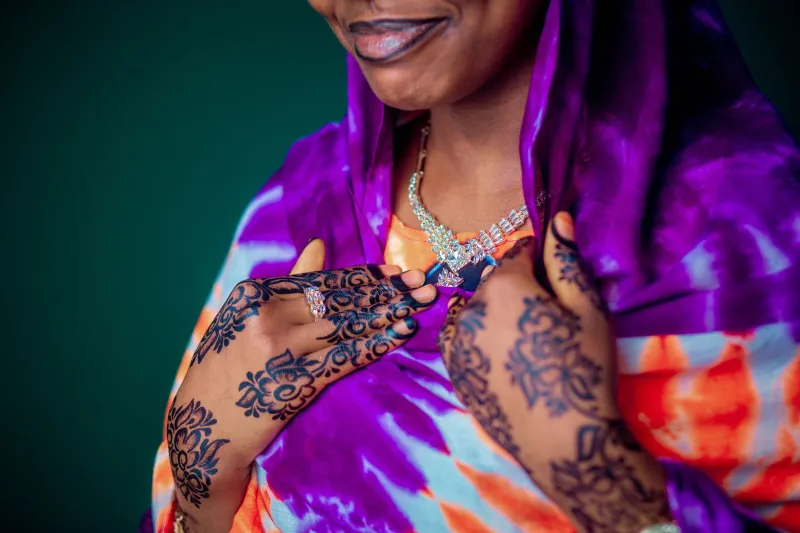
Design vocabularies vary considerably by regional tradition. Moroccan henna tends toward bold geometric patterns with strong negative space. Gulf-style compositions favor fine-line florals and intricate paisley motifs that can consume an entire forearm in delicate tracery. Indian bridal traditions introduce narrative elements—hidden names, symbolic figures, and architectural references—that transform the body into a canvas for personal mythology. A skilled practitioner working with a luxury client will draw from multiple traditions while tailoring the composition to the individual's aesthetic sensibility, event context, and personal heritage.
Addressing the Conversation Around Cultural Respect
Any serious discussion of henna in the American market must acknowledge the nuanced conversations surrounding cultural exchange. For years, the appropriation of henna by non-South Asian and non-Middle Eastern consumers generated legitimate criticism, particularly when the practice was divorced entirely from its cultural significance and reduced to a commercial novelty.
The luxury henna movement, at its best, represents a more considered engagement. The practitioners leading this renaissance are predominantly from the cultures that originated these traditions, and many are explicit about their role as cultural ambassadors rather than mere service providers. They educate their clients about regional differences, the ceremonial significance of specific motifs, and the spiritual dimensions that have historically accompanied henna application—from pre-wedding rituals to post-partum celebrations and religious observances.
For many American clients, this educational dimension is itself part of the appeal. The consultation process becomes a form of cultural immersion, a conversation between practitioner and client that elevates the experience far beyond its aesthetic outcome. Several high-end wellness retreats in California and New York have formalized this by pairing henna sessions with curated discussions on Middle Eastern art history and craft heritage.
Sustainability and the Temporary Luxury Paradox
There is an intriguing philosophical dimension to henna's rise within the luxury sector, one that speaks directly to shifting values among American consumers. The concept of temporary luxury—exquisite in its moment, impermanent by design—runs counter to the traditional luxury instinct to acquire and retain. Yet it aligns powerfully with contemporary conversations about sustainability, intentionality, and the tyranny of accumulation.
Henna leaves no permanent mark and requires no synthetic compounds. The process involves no needles, no anesthesia, and no recovery time. For consumers increasingly critical of the beauty industry's environmental footprint, the appeal of a high-craft, plant-based adornment that biodegrades gracefully is not merely aesthetic—it is ethical.
This positions henna as a natural complement to the broader sustainable luxury movement, one that Hajar has long recognized as central to the future of American premium fashion and beauty. The most enduring luxury, it turns out, may be the kind that knows when to let go.
What to Expect from a Bespoke Experience
For those considering their first luxury henna appointment, the process bears little resemblance to its festival-booth predecessor. Initial consultations—often conducted virtually—allow the practitioner to assess skin tone, review design preferences, and understand the event or occasion for which the adornment is intended. Clients are typically advised on aftercare protocols: keeping the paste undisturbed for a minimum of six to eight hours, avoiding moisture during the initial drying period, and applying a thin layer of natural oil to deepen and extend the stain.
The sitting itself, depending on the complexity of the design, may last anywhere from forty-five minutes to several hours. The finest practitioners describe it as a meditative exchange—a quietude that has become its own form of luxury in an overscheduled world.
The stain, at its darkest, emerges two to three days after application and fades gradually over the following two to three weeks, shifting from near-black to a warm terracotta as it releases from the skin. Many clients describe a particular poignancy in watching it fade—a reminder, perhaps, that the most beautiful things are not always the ones built to last.
In marking the body with something temporary, one makes a statement more permanent than ink: that beauty, at its most sophisticated, is not about possession. It is about presence.