The Art of More: How Middle Eastern Maximalism Became America's Most Sophisticated Style Statement
For the better part of two decades, American luxury dressed itself in restraint. The capsule wardrobe became a moral framework. Neutral palettes were treated as evidence of elevated sensibility. The less you wore — in color, in ornament, in visible effort — the more refined you were presumed to be. Minimalism was not merely an aesthetic; it was an ideology, and it brooked little dissent.
That consensus is fracturing. Quietly at first, then with increasing confidence, a counter-movement has taken root among the very consumers who once championed the spare and the subdued. High-net-worth Americans are reaching for more: more color, more layering, more jewelry, more pattern, more presence. And the aesthetic vocabulary they are reaching toward has a clear cultural address — the design traditions of the Middle East.
Why Minimalism Ran Out of Things to Say
To understand the appeal of what is emerging, it helps to understand what minimalism ultimately failed to deliver. As a luxury signal, restraint depends on context. In a room full of restraint, it becomes invisible. The deliberately plain garment loses its eloquence when it is surrounded by other deliberately plain garments, and the result — however expensive — communicates less distinction than it once did.
There is also the matter of meaning. The minimalist wardrobe, at its most rigorous, asks the wearer to subtract themselves from the equation — to let the cut, the fabric, and the label do the work of identity. For a generation of American luxury consumers who have grown more invested in self-expression and cultural consciousness, this calculus no longer computes. They want their clothing to say something. They want it to say a great deal.
Enter maximalism with a heritage pedigree.
The Middle Eastern Design Principle
It would be a misreading to describe Middle Eastern maximalism as excess. The word implies a lack of discipline, an absence of intention — and nothing could be further from the truth. The layered aesthetic of the region is, in fact, one of the most rigorously considered visual traditions in the world.
Consider the logic of the traditional majlis interior, where geometric tile work, richly embroidered cushions, patterned textiles, and ornamental metalwork coexist in a space that feels opulent but never chaotic. The organizing principle is not simplicity but harmony — a more demanding achievement, in many respects, than reduction. Each element is chosen to converse with the others, creating a totality that is greater than the sum of its parts.
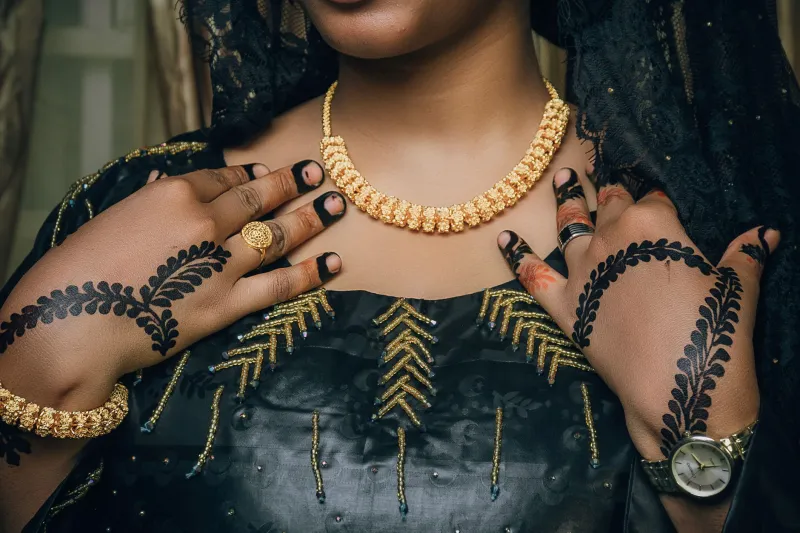
This same logic animates Middle Eastern approaches to personal adornment. The stacking of gold bangles, the pairing of an intricately embroidered abaya with statement earrings, the layering of patterned fabrics in complementary registers — these are not accidents of taste but expressions of a design intelligence that has been refined across centuries. The result is a visual richness that communicates sophistication precisely because it is so clearly intentional.
The New Status Codes
Among America's luxury fashion enthusiasts, the signals of status are being rewritten. The plain cashmere sweater and the understated leather tote — reliable shorthand for a certain kind of affluence — have not disappeared, but they have been joined by a new set of markers that carry different, and in some circles more potent, cultural currency.
Statement jewelry has emerged as perhaps the most visible expression of this shift. Pieces inspired by traditional Middle Eastern goldsmithing — elaborate filigree earrings, wide cuff bracelets with geometric engraving, layered necklaces combining hammered and polished surfaces — are appearing in the collections of luxury houses and independent designers alike, and they are finding receptive audiences among American buyers who understand their historical depth.
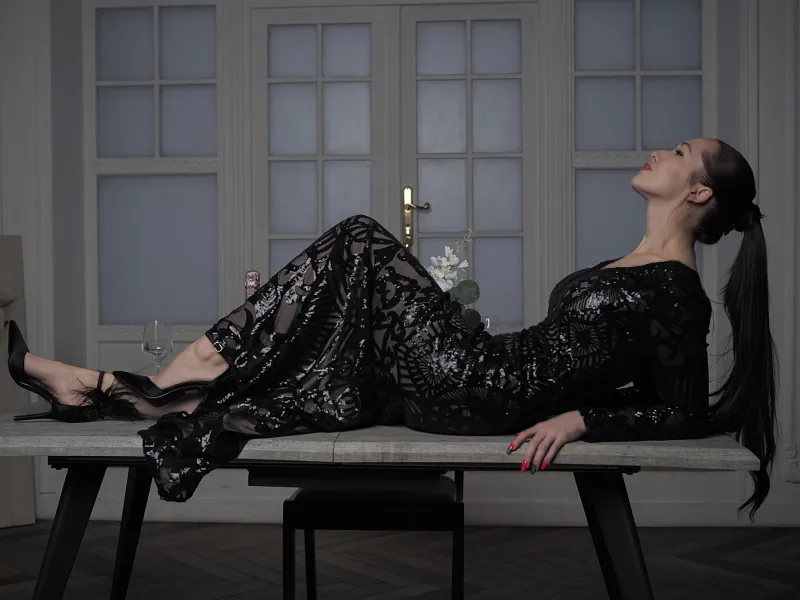
Pattern, too, has been rehabilitated. The arabesque, the paisley in its original Persian form, the intricate geometric tessellations of Islamic art — these motifs are appearing on luxury scarves, on tailored outerwear, on evening wear that makes no apologies for its visual ambition. Worn by someone who understands the cultural provenance of what they carry, such pieces communicate not ostentation but fluency: a knowledge of the world that extends beyond the familiar.
Cultural Appreciation as Luxury Credential
What distinguishes this movement from mere trend adoption is the quality of engagement it demands and rewards. To wear Middle Eastern maximalism well — to layer a richly patterned Moroccan-influenced coat over embroidered separates with the confidence of genuine understanding — requires a degree of cultural literacy that has itself become a marker of distinction.
This is luxury operating at a register that cannot be easily faked. A logo can be replicated; cultural fluency cannot. The American consumer who has invested time in understanding the symbolic vocabulary of Middle Eastern textile traditions, who can speak to the regional specificity of a particular embroidery technique or the historical significance of a geometric motif, occupies a position of genuine sophistication that no amount of spending alone can purchase.
In this sense, maximalism with Middle Eastern influence is the most democratic of elitisms: open to anyone willing to engage seriously with the tradition, and closed to those who approach it as mere decoration.
Hajar and the Case for Intention
At Hajar, the philosophy has always been that true luxury is not about subtraction or addition — it is about meaning. A single, exquisitely crafted piece worn with full understanding of its heritage is as luxurious as a carefully composed ensemble of layered pattern and ornament. What matters is the presence of intention: the sense that every choice has been made with knowledge, care, and a genuine relationship to the cultural tradition being honored.
The rise of Middle Eastern maximalism in American luxury fashion represents, at its best, precisely this kind of intentional engagement. It is a rejection not of taste but of a narrowly defined version of it — an insistence that beauty can be complex, that elegance can be abundant, and that the most sophisticated statement a wardrobe can make is one that reflects a genuine encounter with the wider world.
More, it turns out, can be more. The art lies in knowing how.