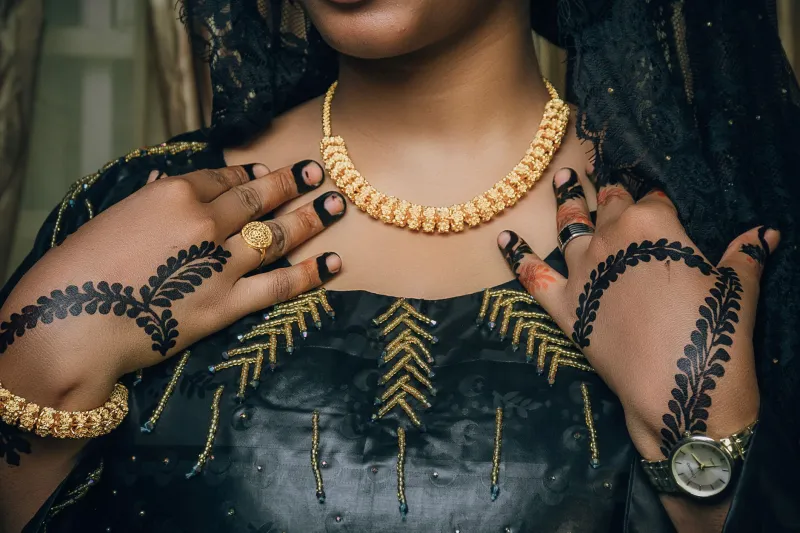
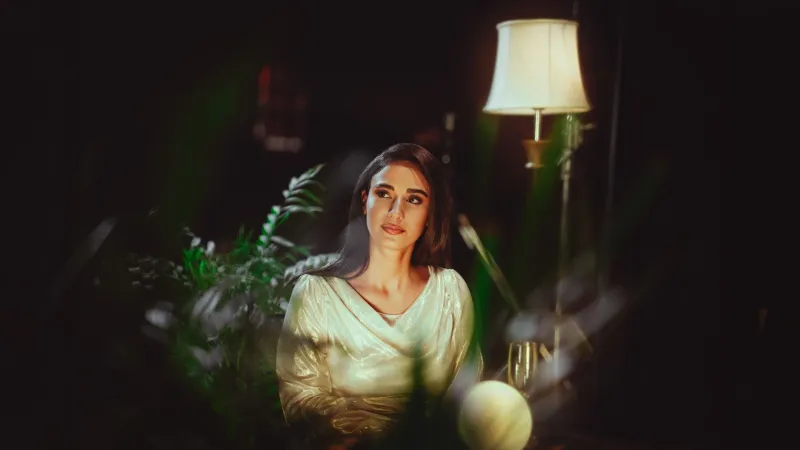
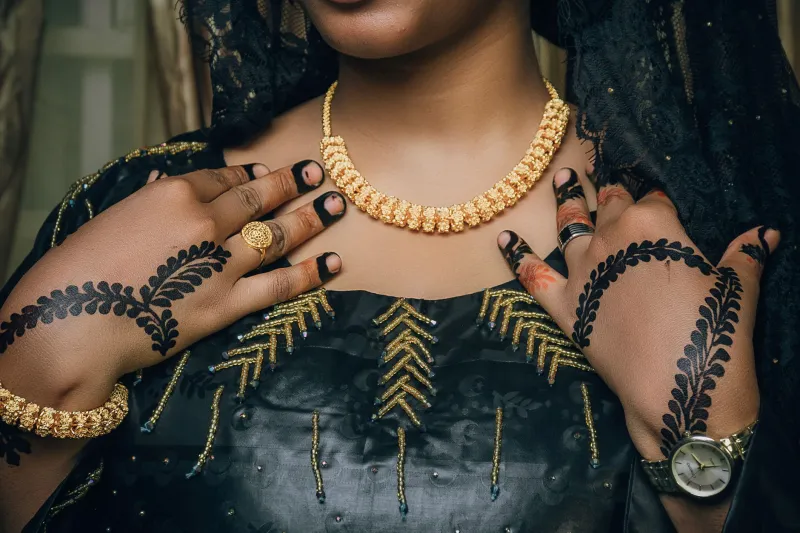
Woven Into the Future: How Ancient Middle Eastern Textile Arts Are Defining Ethical Luxury in America
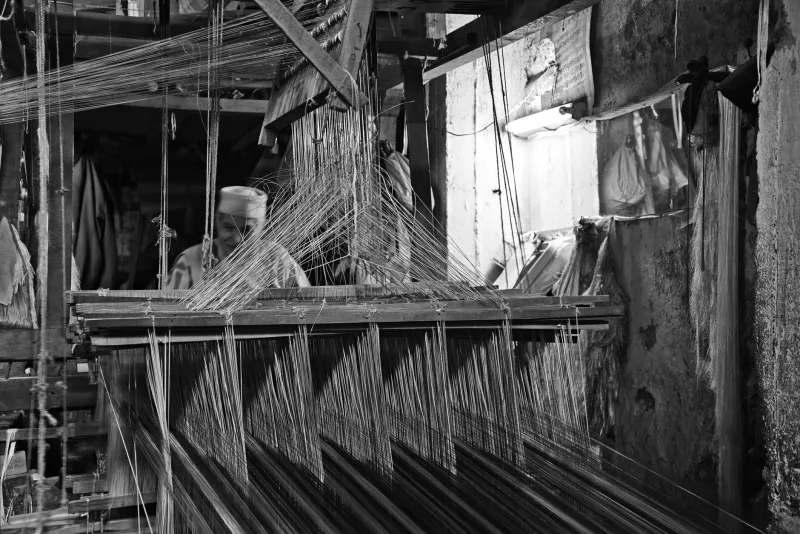
There is a particular kind of fabric that does not simply drape the body — it speaks to it. The handwoven silks of Aleppo, the naturally dyed wools of Anatolia, the intricate brocades that once traveled westward along the old Silk Road: these textiles carry within their threads a knowledge so refined, so painstakingly accumulated over generations, that modern industrial production cannot replicate it. What it can do, however, is recognize its value. And increasingly, it does.
Among affluent American consumers — a cohort that has grown notably more exacting in its definition of luxury — the conversation has shifted decisively. Provenance, process, and purpose now sit alongside cut, drape, and label as markers of genuine quality. Into this evolving landscape, Middle Eastern textile heritage has entered not as an exotic novelty but as a quietly authoritative answer to one of fashion's most pressing questions: how does one dress well without compromise?
The Craft That Sustainability Forgot
For decades, the sustainability dialogue in American fashion orbited familiar Western narratives — Scandinavian slow fashion, Japanese mending philosophies, Italian artisan workshops. What received comparatively little attention was the extraordinary environmental intelligence embedded in Middle Eastern textile traditions, practices that predate the concept of sustainability by several millennia.
Natural dyeing in the Middle East is not a revival movement. It never stopped. Artisans across Morocco, Iran, Turkey, and the Levant have long employed pomegranate rinds, indigo cultivated in desert-adjacent soils, saffron, and mineral-rich clays to achieve colorways of remarkable depth and permanence. These methods produce no synthetic runoff, require no petrochemical fixatives, and yield colors that deepen — rather than fade — with age and wear. The garment, in other words, improves as it is lived in.
Similarly, traditional hand-looming techniques such as the Persian flatweave and the Moroccan Berber loom produce textiles with a structural integrity that machine weaving cannot match. A well-constructed handwoven piece distributes tension evenly across its surface, resisting the fiber breakdown that causes fast-fashion garments to deteriorate within seasons. These are, by design, objects meant to outlast their owners.
Designers Who Are Listening
A growing cohort of luxury designers — some with roots in the region, others drawn to its traditions through rigorous research — are translating these principles into contemporary collections that resonate powerfully with American buyers.
The approach varies. Some studios work directly with cooperative weavers in Fez or Gaziantep, commissioning exclusive textiles that form the foundation of limited-edition pieces. Others have invested in the painstaking process of sourcing heritage-breed wool — the kind that produces a lanolin-rich fiber with natural water resistance — from small family farms operating as they have for centuries. A number of emerging labels have gone further still, establishing full traceability frameworks that allow the end consumer to follow their garment's journey from raw fiber to finished form.
What unites these designers is a shared conviction: that the story of a textile is inseparable from its quality. A kaftan woven on a traditional Syrian loom using madder-dyed cotton is not merely a beautiful object. It is a document of cultural knowledge, a record of a specific place and a specific set of hands. For the American luxury consumer who has grown weary of anonymized production, that specificity is precisely the point.
The American Consumer Recalibrates
Data from the luxury sector tells a compelling story. Research conducted across high-net-worth American households consistently identifies authenticity and craftsmanship transparency as primary drivers of purchase decisions in the premium apparel category — outranking brand heritage and even price point in certain segments. This is not a fringe sensibility. It is the new mainstream of aspiration.
The appetite for what might be called narrative luxury — pieces whose value lies as much in their story as in their construction — has created a natural opening for Middle Eastern textile traditions. These are traditions with an unimpeachable backstory: documented in museum collections, celebrated in academic literature, and carried forward by living craftspeople whose skills represent an irreplaceable form of human knowledge.
For the American buyer who invests in a hand-embroidered Palestinian thobe-inspired jacket or a naturally dyed Moroccan wool coat, the transaction is not merely commercial. It is an act of cultural stewardship — one that aligns personal style with a broader commitment to preservation and ethical production. In a market saturated with claims of sustainability, the genuine article carries considerable weight.
Heritage as Innovation
Perhaps the most striking aspect of this movement is how it challenges the assumption that innovation must be forward-facing. In the context of Middle Eastern textile heritage, the most radical act is often the most traditional one: returning to a technique that industrial production displaced, rediscovering a dye plant that was abandoned in favor of synthetic convenience, or slowing the production timeline to honor the pace that genuine craftsmanship demands.
At Hajar, we have long held that the most enduring luxury is that which connects the wearer to something larger than themselves — to history, to culture, to the accumulated wisdom of generations of makers. The textile traditions of the Middle East do precisely this. They remind us that the most sophisticated thing a garment can do is carry meaning, and that meaning, unlike trend, does not expire.
As American luxury fashion continues its recalibration toward depth over velocity, toward story over spectacle, the ancient looms of the region are proving themselves thoroughly, compellingly modern. The new Silk Road, it turns out, leads directly to the future.