The Layered Self: Building a Bespoke Olfactory Identity Through Middle Eastern Fragrance Composition
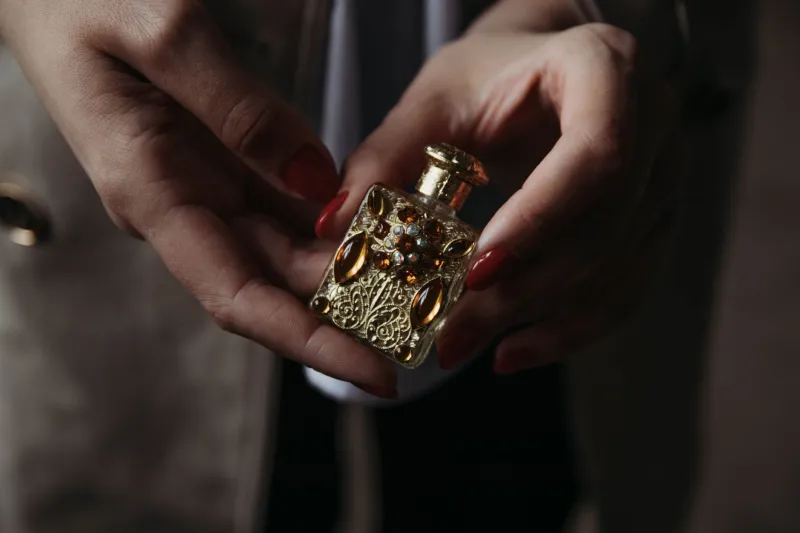
A single perfume, however masterfully composed, tells one story. It announces a mood, conjures a memory, leaves an impression. But the most sophisticated fragrance traditions in the world have never been satisfied with a single story. Across the Arabian Peninsula, in the souks of Muscat and the perfumeries of Riyadh, in the private majlis where guests are welcomed with clouds of oud smoke and offered small vials of concentrated attar, fragrance has always been understood as a layered language—one spoken not in words but in the slow unfurling of notes against warm skin.
This tradition of fragrance layering is now making its way into the vocabulary of the American luxury consumer with a conviction that suggests it is far more than a passing trend.
Why Layering Represents a Paradigm Shift
For most of the twentieth century, the dominant fragrance philosophy in the United States was one of exclusivity through singularity. A woman wore Chanel No. 5 or she wore Fracas. A man reached for Acqua di Gio or he reached for nothing at all. The signature scent was, in its way, a form of personal branding—efficient, consistent, immediately recognizable.
The limitations of this approach, however, are increasingly apparent to those who have encountered what lies beyond it. A single fragrance, no matter how complex, is ultimately fixed. It cannot account for the difference between a Tuesday morning in a glass-walled office and a Saturday evening at a dinner party in the Hudson Valley. It cannot evolve with the seasons, deepen with the years, or respond to the particular chemistry of a body at rest versus in motion.
Fragrance layering dissolves these constraints entirely. By combining multiple fragrant elements—typically beginning with a base of concentrated body oil or attar applied directly to pulse points, followed by one or more eau de parfum compositions, and finished, in some traditions, with the ambient ritual of oud or bakhoor—the wearer constructs a scent that is genuinely singular. Not singular in the sense of a product number, but singular in the deepest sense: unrepeatable, unobtainable by any other means, and entirely one's own.
Understanding the Architecture of a Layered Fragrance
Approaching fragrance layering without some structural understanding is akin to assembling an outfit without any sense of proportion or color theory. The results may be interesting, but they are unlikely to be intentional. The Middle Eastern tradition offers a remarkably coherent framework, one that luxury fragrance curators in the United States are now teaching to private clients as a genuine craft skill.
The Foundation: Attar and Body Oil
The word attar—derived from the Arabic itr, meaning scent—refers to natural aromatic oils distilled from botanical sources and frequently fixed with sandalwood. Applied sparingly to the inner wrists, the base of the throat, and behind the knees, attar creates a warm, skin-close foundation that will anchor and modulate everything applied above it. Rose attar, oud attar, and jasmine attar are among the most prized; each carries a depth and tenacity that synthetic alternatives rarely approach.
The choice of attar is the most personal decision in the layering process. It is the note that will remain longest, the one that defines the dry-down and lingers on fabric hours after the other elements have lifted. Many experienced practitioners advise clients to wear a single attar for several days before building upon it, allowing the body to reveal how the oil interacts with individual skin chemistry.
The Middle Layer: Concentrated Parfum
Above the attar, one introduces the primary fragrance composition—ideally an eau de parfum or parfum concentration that shares tonal affinities with the base without replicating it. A rose attar foundation pairs beautifully with a smoky, resinous parfum built around amber and incense. An oud attar base may support a green, vetiver-forward composition that softens its intensity while adding structural complexity.
The guiding principle here is complementarity rather than contrast. The goal is not to create a competition between notes but a conversation—each element enhancing the others in ways that neither could achieve independently.
The Ambient Dimension: Bakhoor and Oud
For those who wish to engage the full depth of the Middle Eastern tradition, there is a third layer that operates not on the skin but in the surrounding atmosphere. Bakhoor—fragrant wood chips infused with oils and resins—is burned on charcoal or in specialized electric burners, allowing the smoke to permeate clothing, hair, and the immediate environment. The practice is deeply ceremonial in its origins, associated with hospitality, spiritual preparation, and the marking of significant occasions.
In contemporary luxury contexts, a brief exposure to bakhoor before departing for an event adds an ineffable dimension to the overall scent profile—a warmth and complexity that no spray-applied fragrance can fully replicate. Several New York and Los Angeles fragrance consultants now include small travel bakhoor kits as part of their client onboarding packages.
Building a Seasonal Scent Wardrobe
One of the most compelling aspects of the layering approach, from the perspective of the discerning American consumer, is its inherent adaptability. Just as a well-considered wardrobe shifts with the seasons—lighter linens in summer, heavier wools in winter—a layered fragrance practice can and should evolve throughout the year.
Spring compositions might prioritize green attars and floral parfums, leaning into freshness and lightness. Summer invites citrus-forward middle layers that interact with warm skin to create vibrant, immediate impressions. Autumn is the season most naturally aligned with the deep resins and smoky woods central to the Gulf tradition—oud, amber, and labdanum come forward, and the overall palette darkens beautifully. Winter, finally, is the moment for maximum richness: heavy rose attars layered beneath dense oriental parfums, warmed by bakhoor, creating something that feels less like a product and more like an atmosphere.
Fragrance curators who work with private clients in this way describe the seasonal transition as one of the most anticipated rituals in their clients' lives—a moment of deliberate reinvention that carries genuine emotional resonance.
The Investment and the Return
It would be disingenuous to discuss luxury fragrance layering without acknowledging the financial commitment the practice requires. High-quality attars—particularly those incorporating genuine oud or natural rose absolutes—represent a meaningful investment, with fine examples retailing between several hundred and several thousand dollars per tola (approximately 11.6 grams). A well-curated collection of three to five layering-compatible parfums adds considerably to this figure.
Yet the calculus of value here is different from that of conventional fragrance purchasing. A carefully selected attar, used sparingly and stored properly, may last for years. More significantly, the practice of building a personalized scent vocabulary is not a one-time acquisition but an ongoing discipline—one that rewards attention, develops with experience, and produces results of increasing sophistication over time.
In this sense, fragrance layering mirrors the broader philosophy that has always distinguished true luxury from mere expense. It is not about what one owns but about what one has learned. The most extraordinary scent one can wear is not available in any boutique. It is composed, deliberately and knowledgeably, by the wearer—and it exists nowhere else in the world.