The Invisible Flex: How America's Sharpest Dressers Found Power in What Cannot Be Seen

Let us begin with a provocation: the most powerful garment in the room is the one that requires the most knowledge to appreciate.
This is not a new idea. It is, in fact, an ancient one—embedded in the philosophy of Middle Eastern textile and design traditions that have, for centuries, understood the difference between decoration that announces itself and craftsmanship that reveals itself only to those who know how to look. What is new is that this idea is now reshaping the wardrobes of America's most sophisticated dressers, and doing so with a velocity that no trend forecaster anticipated.
The Tyranny of the Logo
For much of the past three decades, American luxury fashion operated on a simple equation: visibility equals value. The larger the monogram, the louder the pattern, the more immediately legible the brand—the more status the garment was presumed to convey. This logic served its purpose. It created a common language of aspiration, legible across income levels and social contexts.
But languages evolve. And the most discerning speakers of any language eventually tire of its most elementary vocabulary.
America's top stylists have been tracking this fatigue for several years. "There is a client," says one New York-based stylist who dresses executives and cultural figures, "who has simply moved past the logo. Not because they cannot afford what it represents, but because what it represents is no longer sufficient for what they are trying to say."
What they are trying to say, it turns out, requires a different kind of grammar entirely.
The Middle Eastern Principle of Knowing Subtlety
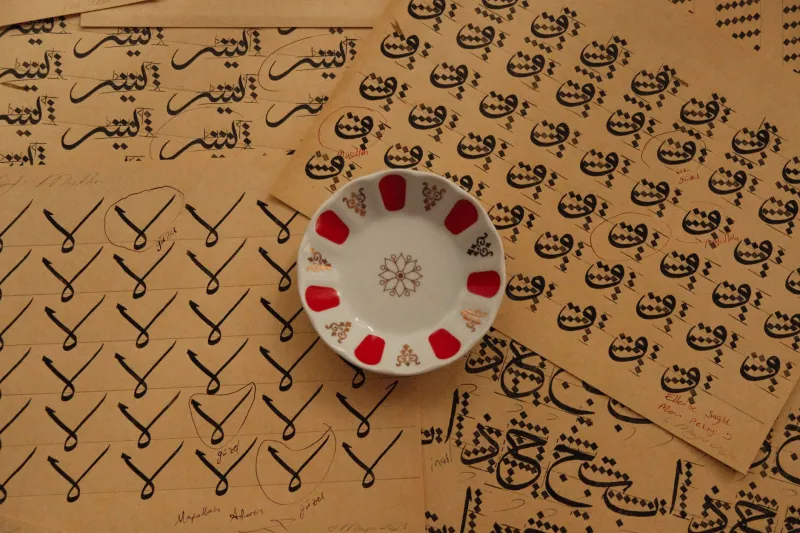
In the great tradition of Islamic art and design, restraint is not the absence of expression. It is its most sophisticated form. The principle of mizan—balance, proportion, measured beauty—governs everything from architectural ornament to the hand-stitched borders of ceremonial garments. Nothing is accidental. Nothing is excessive. And crucially, nothing is designed to be understood at a glance.
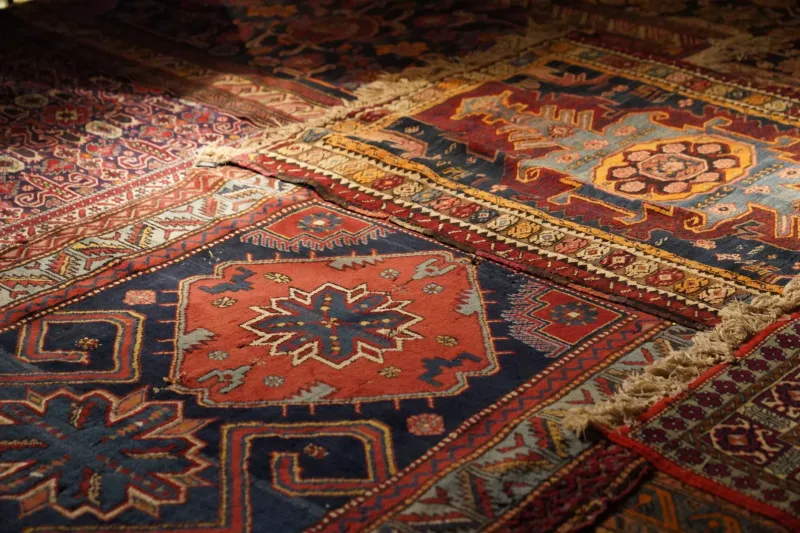
The geometric patterns of Moroccan zellige tilework, for instance, reward extended contemplation. The embroidery of a Palestinian thobe communicates village of origin, marital status, and family lineage to those with the cultural literacy to read it—and appears simply beautiful to those without. The oud-infused textiles of the Gulf carry meaning in their fragrance as much as their weave.
This is knowing subtlety: the art of encoding depth into surface, of creating beauty that reveals itself in layers rather than all at once.
American collectors who have encountered these traditions—whether through travel, through relationships with Middle Eastern artisans, or through Hajar's own curatorial lens—frequently describe a moment of recognition. The recognition that this is what they have been searching for in their own wardrobes.
What the Most Expensive Piece Looks Like
The collectors and stylists interviewed for this piece returned, repeatedly, to a single observation: the most valuable item in a sophisticated wardrobe is almost always the one least immediately identifiable.
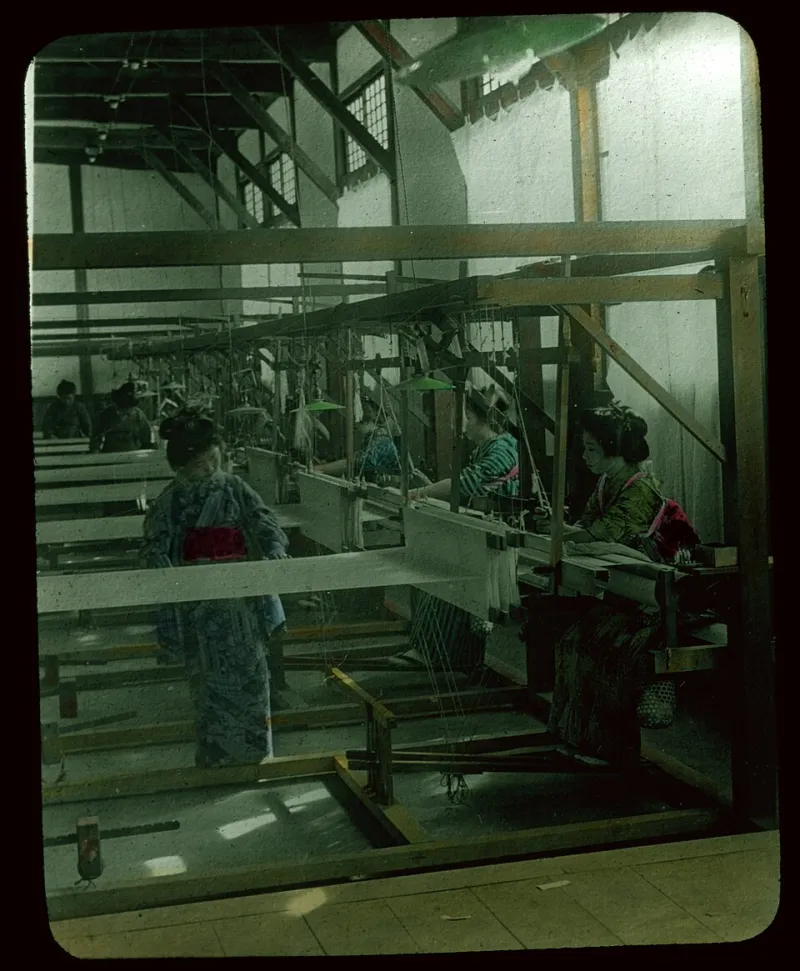
It may be an unbranded coat constructed from a cashmere-silk blend woven by a single family of artisans in Yazd. It may be a linen tunic whose proportions are so precisely calibrated that tailors stop to examine it but cannot name its maker. It may be a belt crafted from hand-tooled leather whose technique has not changed in four hundred years.
What these pieces share is not price alone. They share a quality of presence—a sense that the garment has been made by someone who understood exactly what they were doing and refused to rush the understanding. They reward proximity. They improve with knowledge. And they confer, on the wearer, a kind of authority that no logo has ever been able to manufacture.
"The logo tells the room you can afford something," one Los Angeles-based collector observed. "The unmarked piece tells the room you know something. Those are very different statements."
Restraint as Radical Act
In a culture still largely organized around visibility, choosing restraint is not merely an aesthetic preference. It is, as several of the stylists consulted for this piece noted, a genuinely countercultural act.
To dress without announcement in a world of announcements is to claim a kind of sovereignty. It is to say: I do not require your recognition to know my own worth. This is, at its core, the same philosophical stance encoded in the great works of Islamic art—a tradition that, at its height, directed its most extraordinary skill not toward the exterior façade but toward the interior courtyard, the private garden, the space seen only by those invited in.
The exterior could be plain. The interior was transcendent. Only those who crossed the threshold would know.
Building Toward Invisibility
For American dressers considering this approach, the practical implications are significant. A wardrobe built on the principle of knowing subtlety requires a different kind of investment—not necessarily larger in dollar terms, but more concentrated, more researched, more patient.
It means seeking out makers whose names are not on billboards. It means developing the literacy to recognize quality in a hand-finished seam, an undyed natural textile, a silhouette whose geometry has been considered rather than merely fashionable. It means, in short, becoming a reader of the language rather than a consumer of its most popular phrases.
Middle Eastern craft traditions offer an extraordinary curriculum for this education. They are, almost without exception, traditions that have never required external validation to understand their own excellence. They have simply continued—making, refining, deepening—for generations.
America's most discerning dressers are, at last, paying attention. And in paying attention, they are discovering that the loudest statement a wardrobe can make is, paradoxically, the one spoken in the quietest possible voice.