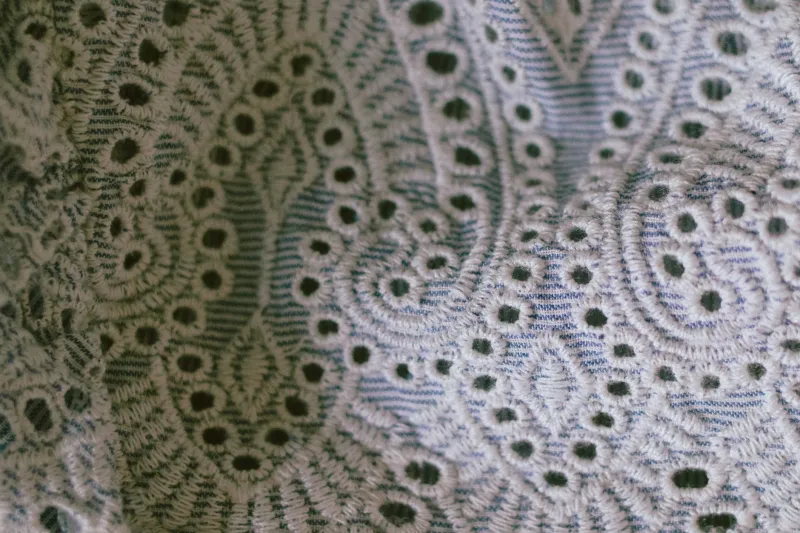
What the Loom Leaves Out: How Middle Eastern Textile Philosophy Is Transforming the American Minimalist's Wardrobe
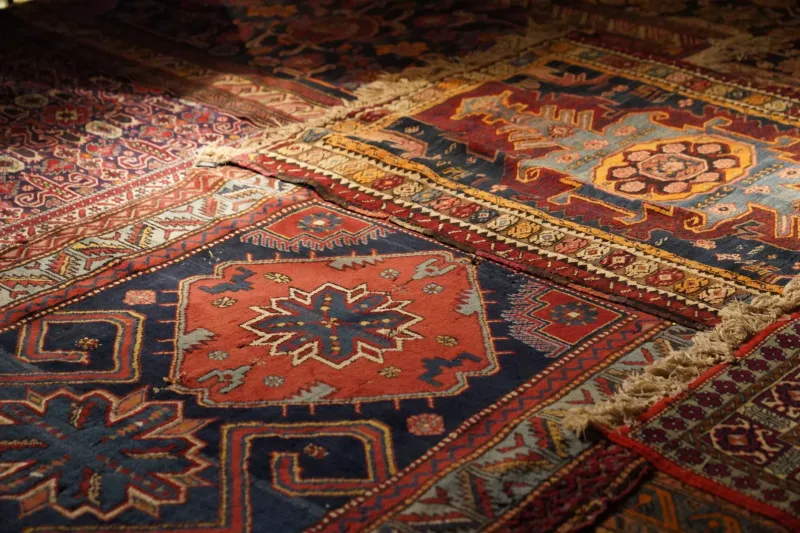
There is a particular kind of discipline that reveals itself only through absence. A master weaver in Fez or Tabriz understands this instinctively — that the threads not laid down are as deliberate as those that are. The space between patterns is not a gap to be filled but a breath to be honored. And increasingly, that philosophy is finding its most receptive audience not in the ancient workshops of the Levant or the Maghreb, but in the wardrobes of thoughtful American consumers who have grown quietly exhausted by excess.
This is not minimalism in the clinical, Scandinavian-influenced sense that dominated American interiors for the better part of a decade. It is something older, richer, and considerably more nuanced — a philosophy that treats restraint not as deprivation but as a form of eloquence.
The Grammar of the Void
In the vocabulary of Middle Eastern textile craft, negative space carries specific weight. Weavers across Morocco, Iran, Turkey, and the broader Arab world have long employed what scholars of Islamic art refer to as tafriqa — a principled separation of motifs that allows each element to breathe, to be seen fully, to communicate without competition. The practice is not incidental. It is structural, intentional, and deeply philosophical.
Where Western textile traditions have historically favored density — the more intricate the pattern, the more prestigious the cloth — many Middle Eastern weaving lineages operate on an inverse logic. A single, precisely executed geometric form set against an expanse of undyed ground fabric can carry more visual authority than a surface crowded with competing motifs. The restraint is the statement.
This principle, once confined to the study of art historians and textile conservators, has begun migrating into mainstream American fashion consciousness. Collectors who began acquiring handwoven pieces for their interiors found themselves drawn, almost inevitably, to the garments that embodied the same logic. Curators at specialty boutiques in cities like New York, Los Angeles, and Chicago report a marked increase in customers who arrive not seeking a particular item, but seeking a particular feeling — one of considered presence rather than visual noise.
From Volume to Value
The timing of this shift is not accidental. After years of fast fashion's relentless churn — the weekly drops, the disposable trend cycles, the wardrobes measured in quantity rather than quality — a meaningful segment of American consumers has begun asking a more demanding question: What do I actually need, and what does it need to say?
Middle Eastern textile philosophy offers a surprisingly coherent answer. The principle of strategic negative space translates, in practical wardrobe terms, into a methodology of deep curation. Rather than acquiring pieces that clamor for attention, the practitioner of this approach seeks garments that possess what might be called quiet authority — a single exceptional textile, worn with confidence, that requires nothing else to complete it.
This is a significant departure from the layering-and-accessorizing logic that has governed American fashion advice for decades. It demands, in its place, a willingness to trust the singular. One extraordinary piece. One considered silhouette. One textile whose craftsmanship rewards sustained attention.
The commercial implications are equally significant. Consumers aligned with this philosophy purchase less frequently, but they purchase with far greater deliberation. They research provenance. They ask about the weaver. They want to understand the regional tradition from which a piece emerges. In doing so, they are not merely buying clothing — they are entering into a relationship with a material culture that extends well beyond the transaction.
Learning to See What Is Not There
Adopting a textile philosophy rooted in negative space requires a recalibration of the eye. American consumers, trained by decades of visual saturation — in advertising, in social media, in the sheer density of retail environments — often find that learning to appreciate restraint is itself a practice.
Several American textile educators and independent curators have begun offering workshops specifically designed to develop this capacity. Participants are invited to study historic Middle Eastern woven pieces, spending extended time with a single kilim or a fragment of Damascene silk, training themselves to perceive the intentionality of empty ground, the rhythm created by spacing, the dignity of a motif given room to exist.
The experience, by most accounts, is quietly transformative. Attendees frequently describe a subsequent inability to find satisfaction in densely patterned or overtly branded garments. The eye, once attuned to meaningful restraint, begins to read visual excess as a form of insecurity — a textile equivalent of speaking too loudly in a room that calls for measured conversation.
The Garment as a Single Considered Statement
What emerges from this recalibration is a wardrobe that functions less as a collection and more as a considered set of statements. Each piece is selected not to fill a category but to fulfill a purpose — and that purpose is always, at its core, communicative.
The most compelling garments produced within this philosophical tradition are those in which the weaver's restraint is most evident. A robe cut from undyed raw silk, its surface interrupted by a single band of hand-embroidered geometric work at the cuff. A coat woven in a muted, earth-derived palette, its only ornamentation the structural precision of its seams. A wrap whose negative space is so confidently handled that it reads, at a distance, as pure color — and only on close inspection reveals the intricate, deliberate patterning within.
These are not garments designed to be understood immediately. They are designed to reward patience — to disclose their full sophistication gradually, to the observer willing to remain present long enough to receive it.
In an American fashion culture that has long privileged the immediate and the legible, this quality feels genuinely radical.
Wearing Intention
The broader implication of Middle Eastern textile philosophy, as it takes root in American wardrobes, is a fundamental reimagining of what fashion is for. If a garment's value lies not in its volume of pattern or the prestige of its label but in the quality of its silence — in the deliberateness of what its maker chose to leave unworked — then the act of wearing it becomes something more than personal expression.
It becomes, in a quiet way, a practice of integrity. A commitment to seeing clearly, choosing carefully, and carrying only what is genuinely worth carrying.
The loom, as Middle Eastern weavers have understood for centuries, teaches this lesson in every piece it produces. What it leaves out is never an oversight. It is, always, the point.