The Discipline of Desire: How Intentional Sacrifice Is Becoming the Defining Luxury of the American Elite
There is a particular kind of wealth that announces itself not through abundance, but through absence. In the most considered wardrobes and the most carefully curated homes of America's cultural vanguard, something remarkable is happening: the deliberate removal of excess has become the most eloquent expression of status available. And the philosophical tradition quietly informing this shift traces its roots not to Scandinavian minimalism or Silicon Valley asceticism, but to the ancient spiritual architecture of the Middle East.
A Different Understanding of Value
At the heart of Middle Eastern spiritual life lies a concept that Western luxury culture has long struggled to accommodate: the idea that sacrifice is not deprivation, but elevation. In the Islamic tradition, the act of giving up something of genuine personal value—time, comfort, material ease—is understood as a form of refinement. It is not the absence of desire that is celebrated, but the mastery of it. The individual who chooses restraint from a position of abundance occupies a fundamentally different moral and social register than one who abstains out of necessity.
This distinction is proving enormously resonant among affluent Americans who have grown quietly exhausted by the relentless mechanics of modern consumption. When everything is available instantly and in unlimited quantity, acquisition loses its meaning. The purchase that required no sacrifice, no waiting, no genuine deliberation carries no weight. It is, in the most precise sense, worthless—regardless of its price tag.
The Commission as Covenant
Perhaps nowhere is this philosophical shift more visible than in the growing preference for bespoke, commission-only pieces among high-net-worth American consumers. To commission a garment or an object of craft is to enter into a relationship that demands patience, engagement, and a willingness to surrender immediacy. The piece will not arrive tomorrow. It may not arrive for months. Its creation will require decisions—about material, proportion, provenance—that demand genuine attention.
This process mirrors, in a secular register, what the pilgrim undertakes when preparing for the Hajj: a deliberate reorientation of priorities, a setting aside of convenience in service of something more enduring. The American collector who waits eight months for a hand-embroidered abaya-inspired coat from a Moroccan atelier, or who commissions a single piece of Bedouin-influenced gold jewelry through a New York jeweler working with artisans in the Gulf, is not simply purchasing an object. They are purchasing the experience of sacrifice itself—and the object becomes the permanent record of that experience.
Seasonal Scarcity as Social Currency
Beyond the individual commission, a broader practice of deliberate scarcity is reshaping how America's most thoughtful dressers approach their wardrobes. The seasonal wardrobe rotation—once a practical necessity of pre-industrial life and a cornerstone of traditional dress culture across the Middle East—has been reclaimed as a sophisticated editorial discipline.
Rather than maintaining an ever-expanding closet of available options, a growing number of American women and men of means are adopting the practice of the curated seasonal wardrobe: a fixed, intentional selection of pieces chosen with care at the beginning of each season and worn exclusively until the next transition. Nothing is added impulsively. Nothing is retained without purpose. The wardrobe becomes, in effect, a spiritual practice—a daily reminder that choice and commitment are inseparable.
This approach finds deep resonance in the Middle Eastern tradition of dressing with occasion-specific intentionality, where the selection of a garment carries social and spiritual weight that extends far beyond aesthetics. To wear something is to make a statement about who you are and what you value. The American tastemaker who dresses from a wardrobe of twenty considered pieces communicates something categorically different from one who selects from an undifferentiated mass of options.
Limited Editions and the Ethics of Exclusivity
The luxury market has long trafficked in artificial scarcity—limited-edition releases engineered to create urgency and inflate perceived value. What is emerging among the most sophisticated American consumers is something altogether different: a preference for genuine scarcity rooted in the honest limitations of craft.
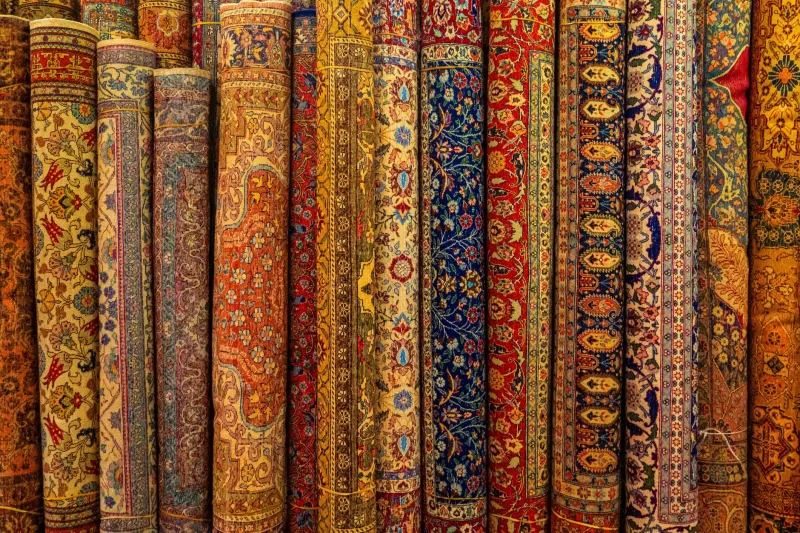
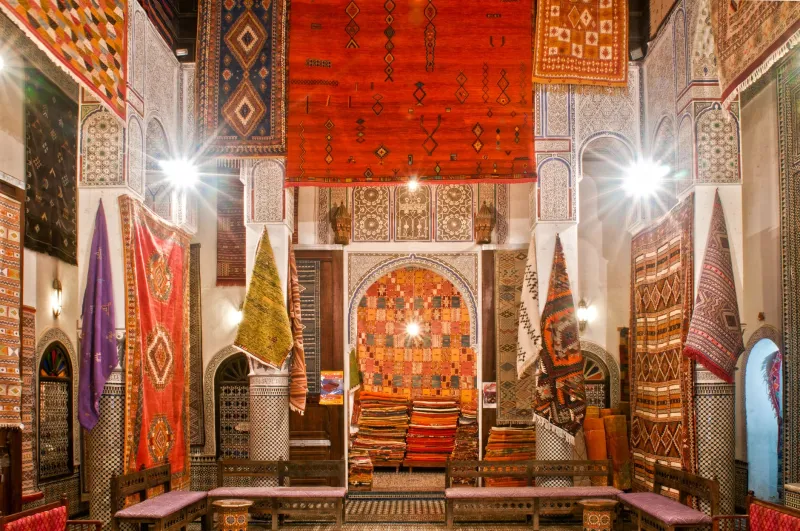
A textile woven on a traditional handloom in Fez produces perhaps thirty meters of fabric per week. A silversmith in Oman working in the classical filigree tradition may complete four pieces per month. These are not marketing constraints; they are the natural boundaries of human skill applied at the highest level. To acquire such a piece is to accept those boundaries—to participate in a system of value that is not manufactured but earned.
This distinction between performed and authentic scarcity is one that America's most discerning consumers are increasingly capable of making. The question is no longer how rare an object appears to be, but how genuinely difficult it was to bring into existence. Sacrifice, in this framework, is not a marketing strategy. It is the measure of an object's worth.
The Interior Life of the Wardrobe
What unifies these various expressions of intentional sacrifice is a shift in the locus of luxury itself. The traditional American model of high-end consumption placed value in the external—the visible label, the recognizable silhouette, the brand whose name communicated status to those who encountered it. The emerging model, informed by Middle Eastern philosophical tradition, places value in the interior: in the knowledge of what was relinquished to obtain something, in the relationship between the wearer and the maker, in the private understanding that what one carries was chosen with full deliberation.
This is, in a meaningful sense, a more demanding form of luxury. It requires the consumer to do genuine intellectual and emotional work—to research provenance, to cultivate relationships with makers, to resist the seduction of the immediate. It asks something of the person who wishes to participate in it.
And that asking, that requirement of effort and discipline, is precisely the point. In the Middle Eastern spiritual tradition, the sacrifice that costs nothing is no sacrifice at all. The luxury that requires nothing of its possessor is, by the same logic, no luxury worth having.
For the American tastemaker who has arrived at this understanding, the wardrobe, the home, and the life of considered acquisition become something more than aesthetic statements. They become evidence of an inner discipline—a daily practice of choosing depth over convenience, meaning over volume, and the enduring over the immediate. That, in the end, is the principle that no price point can manufacture and no trend cycle can replicate.